
Currently Empty: $0.00

2026-03-05
0 Comments
Introduction: The Underestimated “Emergency Consumer Goldmine” in Hospital
With the accelerated adoption of smart healthcare, hospital scenarios have become prime locations for vending machine operators due to stable foot traffic and essential consumer demand. Industry research shows that tertiary hospitals can generate 5,000-10,000 daily visits, with patients, families, and medical staff demonstrating high-frequency, stable demand for food, beverages, and daily essentials. However, many operators remain trapped in the “only water and tissues” mindset, missing true profit growth opportunities.
I. Core Logic for Medical Scenario Product Selection: Emergency and Comfort
A hospital is a unique ecosystem woven from urgent needs, complex traffic flows, and highly specialized scenarios. Consumer purchasing motivations here differ fundamentally from general retail—they need “solutions,” not “snacks.” According to operational data, machines using scenario-based stocking solutions achieve average sales 47% higher than general solutions, with gross margins 8.3 percentage points higher. This means universal stocking plans are inherently inefficient; successful operation depends on precise deconstruction of hospital micro-scenarios.
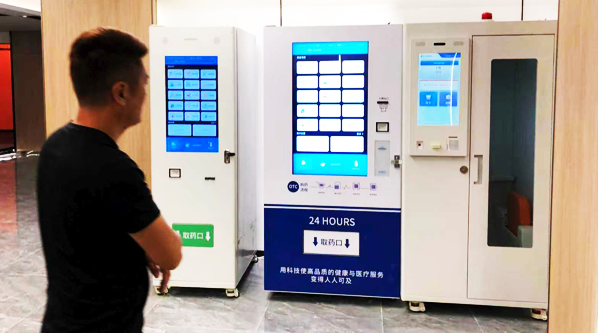
II. Four High-Profit Product Categories
1. Basic Essentials (Stable Traffic Entry Point)
- Convenience Foods: Bread, cup noodles, mixed congee—ready-to-eat items meeting 24/7 basic energy needs
- Healthy Beverages: Bottled water, unsweetened teas, functional drinks. Data shows pure water sales can be 2-3 times higher than other snacks
2. Emergency High-Profit Items (50-65% Gross Margin)
This is the most undervalued “profit goldmine” in hospital scenarios. Non-traditional products account for over 45% of total sales volume, with comprehensive gross margins far exceeding ordinary beverages.
Core Product List:
- Health Protection Items: Individually packaged medical masks (essential for consultations and caregiving, extremely high repurchase rate), disinfectant wipes/hand sanitizer, heat packs (winter “stockout kings” in obstetrics and infusion areas, averaging over 200 daily sales), bandages/iodine cotton swabs
- Emergency Electronics: Multi-port charging cables (essential for families staying overnight), disposable earphones, shared power banks (fast turnover, stable income)
International Data Support: Data from the first 24 weeks of a U.S. public health vending machine project showed OTC painkiller transactions reaching 311, first aid kits 77, bandages 65, and sanitary products 98—fully confirming stable demand for emergency supplies in medical scenarios
3. Nutritional Comfort Items (High Unit Price, High Satisfaction)
- Ready-to-eat nutritional congee, small-pack protein powder (exclusive for post-surgery and elderly patients)
- Sugar-free biscuits, low-fat milk (meeting special dietary needs of diabetes and cardiovascular patients)
- Eye masks, earplugs (essential for overnight sleep in inpatient areas)
4. Medical Staff Exclusive Category (Overlooked Potential Group)
Doctors and nurses often miss regular meal times due to work, with peak purchase times concentrated between 3-4 PM and 9-10 PM. Recommended products:
- Ready-to-eat meals requiring no heating, individually packaged high-protein foods
- Portable coffee and functional drinks
- Energy bars that can be eaten one-handed
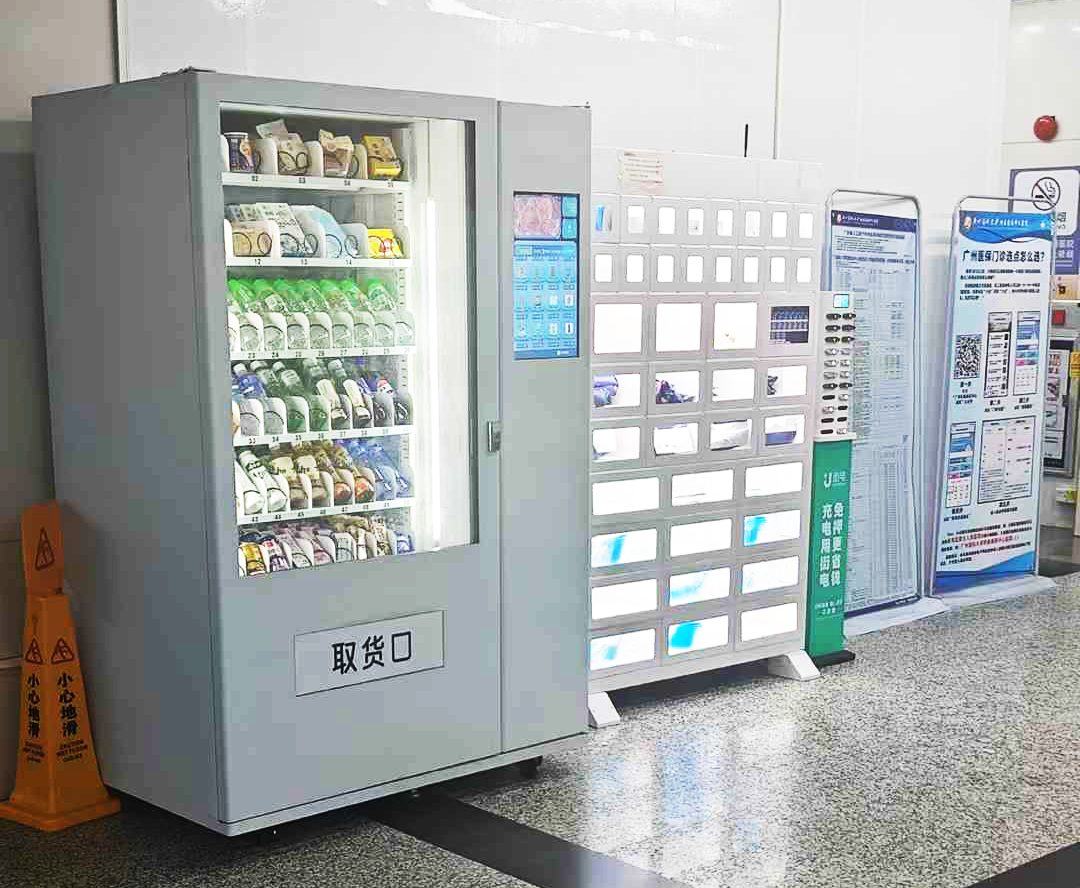
III. Differentiated Configuration Strategies by Hospital Zone
Treating “the hospital” as a unified whole leads to failure. Differentiated needs should be addressed by zone:
| Zone | Consumption Characteristics | Core Product Strategy |
|---|---|---|
| Outpatient Hall/Waiting Areas | Densest traffic, highest anxiety, long waiting times | Small-pack snacks, beverages, tissues—quick consumables requiring high throughput capacity |
| Inpatient Floors | Highest user stickiness, needs shift from “immediate” to “sustained replenishment” | Toiletries, slippers/towels, nutritional items, nighttime snacks; night sales can account for 25-30% of full-day revenue |
| Medical Procedure Waiting Areas | Post-examination immediate needs (after fasting/fluid retention) | Mild pastries, bottled water, candies—addressing specific physical discomfort |
| Medical Staff Rest Areas | High-pressure quick replenishment | Coffee, functional drinks, healthy fast food, dairy products |
IV. Key Considerations for Compliance Operations and Equipment Selection
Required Qualifications
- Business license
- Food operation permit (if including pre-packaged food)
- Medical device registration (for items like masks)
Medical-Specific Equipment Requirements
Ordinary vending machines often cause complaints in hospitals due to noise and appearance issues. Truly “hospital-savvy” equipment should feature:
- Three-zone intelligent temperature control: Ambient zone (masks, cables) + 4°C refrigerated zone (dairy) + large-item ambient zone (tissues)
- Compact dimensions: Approximately 0.5㎡ footprint, suitable for narrow corridors
- Remote intelligent operation: Real-time inventory, sales, and fault alert monitoring support
Operational Validation
After deploying 3 medical-specific units in emergency, obstetrics, and infusion areas of a provincial people’s hospital, average monthly sales reached 9,200 RMB per machine, with protection and emergency items accounting for 52%. Zero complaints were received, and the project was designated a “Smart Convenience Service Demonstration Project.”
V. Conclusion and Investment Recommendations
According to the “2026 China Smart Healthcare White Paper,” over 60% of tertiary hospitals plan to expand intelligent convenience terminals in the next two years, making medical scenarios one of the fastest-growing B2B sectors for vending machines.
Key Investment Points:
- Break the “water + tissues” mindset, increasing emergency high-profit items (masks, charging cables, heat packs, etc.) to over 40%
- Customize product selection by hospital zone to achieve “differentiation across every area”
- Choose medical-specific silent equipment to avoid compliance risks
- Establish data-driven dynamic optimization mechanisms to eliminate inefficient SKUs
Investing in hospital vending machines isn’t about price competition—it’s about understanding medical scenarios and product fit. Only by truly considering the perspectives of patients, families, and medical staff can a machine transform from a “corner metal box” into a “warm supply station.”