
Currently Empty: $0.00

2026-01-19
0 Comments
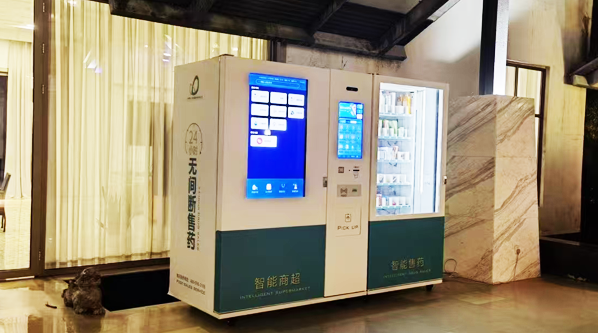
According to a 2023 report by the American Pharmacists Association, over 34% of prescription medication needs occur outside traditional pharmacy operating hours, with nighttime and weekend demand chronically unmet. Concurrently, retail space utilization efficiency is increasingly under scrutiny, as growth in sales per square foot at traditional retail points has plateaued. As an innovative distributed healthcare solution, pharmacy vending machines are creating new avenues for value growth for B2B clients, including commercial real estate operators, retail chains, and transportation hubs.
Successful Validation Across Diverse Scenarios
1. Convenience Store Scenario
A major convenience store chain partnered with a pharmaceutical manufacturer to deploy medication vending machines across multiple locations. The machines offer 80 common over-the-counter medications, including cold remedies, gastrointestinal treatments, and pain relievers, and feature a multi-language interface.
Key Findings: Nighttime sales (10 PM – 7 AM) accounted for 38% of total sales. Overall store foot traffic increased by 7.2%.
Crucial Insight: 71% of users indicated they were “more likely to choose this convenience store because they knew it had a medication vending machine.”
2. Transportation Hub Scenario
German Railway stations deployed integrated health kiosks offering not only basic medications but also travel essentials like motion sickness pills, bandages, and disinfectants.
Key Findings: The machines met 89% of travelers’ urgent medication needs and contributed to a 4.3% increase in station commercial revenue. During strikes or delays, usage surged by 300%, proving their critical value in emergencies (Source: Deutsche Bahn 2023 Corporate Social Responsibility Report).
3. University Campus Scenario: Extending Health Services
A University of California campus deployed medication vending machines at six key locations, focusing on student needs like allergy medication, pain relievers, and first-aid supplies.
Key Findings: Non-urgent visits to the campus health center decreased by 22%, and access to nighttime health services improved by 65%. The project was integrated into the campus wellness promotion plan and received high praise from student health services (Source: University of California Annual Health Services Evaluation).
Core Advantages of Intelligent Systems
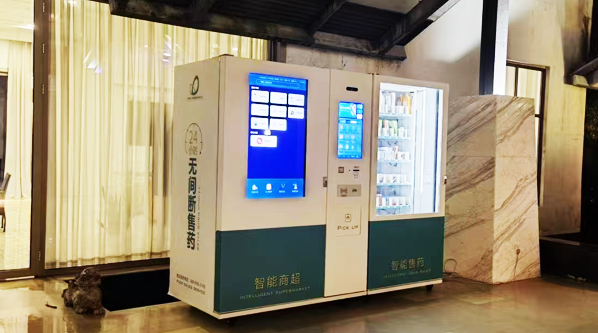
Modern pharmacy vending machines offer significant value for B2B deployment through technological advancements:
Intelligent Climate Control System: Features independent multi-zone temperature control to ensure compliant medication storage.
Refrigerated Zone: 2-8°C (for specific medications)
Ambient Zone: 15-25°C
Humidity Control: 45%-65% RH
Remote Monitoring Platform:
Real-time inventory monitoring accuracy: 99.8%
Alert response time: <30 minutes
Restocking route optimization: Reduces operational costs by 20%
Compliance Safeguards:
Age verification system (for restricted substances)
Purchase record traceability (HIPAA/GDPR compliant)
Automatic printing of electronic instructions

B2B Business Model Analysis
Cooperation Model Options:
Revenue Share Model: The venue receives 15-25% of sales.
Fixed Rental Model: Monthly fee of $300-$800 per unit (depending on location value).
Joint Operation Model: The B2B client provides the space, while the operator manages all services.
Deployment Strategy & Best Practices
Golden Rules for Site Selection:
Foot Traffic Threshold: Daily pedestrian flow > 800 people.
Demand Density: No 24-hour pharmacy within a 500-meter radius.
Visibility: Main thoroughfare location with no sightline obstructions.
Complementary Needs: Proximity to other essential retail points (e.g., convenience stores, food outlets).
Key Compliance & Regulatory Requirements
United States: Must comply with State Board of Pharmacy regulations; most states require individual device registration.
European Union: Requires CE certification and GDP (Good Distribution Practice) compliance review.
Australia: Requires TGA (Therapeutic Goods Administration) registration and strict adherence to medication scheduling.
Future Development Trends
Service Integration: 2024 new models are beginning to integrate telehealth terminals, allowing users to consult before purchasing.
Personalized Recommendations: Systems using purchase history to intelligently recommend products, boosting cross-selling rates.
Insurance Integration: Pilot projects have successfully integrated basic medical insurance for direct settlement, significantly expanding the potential user base.
B2B Decision-Making Recommendations
For B2B clients considering deploying pharmacy vending machines, a phased approach is recommended:
Phase One: Feasibility Assessment (2-3 weeks)
Analyze site foot traffic patterns, research surrounding healthcare resources, and evaluate the potential user profile.
Phase Two: Pilot Deployment (1-2 units, 3-6 months)
Select the most representative site(s), establish a detailed data tracking system, and collect user feedback.
Phase Three: Optimization & Expansion (Data-Driven Decisions)
Adjust product mix, optimize operational processes, and develop an expansion roadmap.
Pharmacy vending machines not only fill the service gaps left by traditional healthcare hours but also provide B2B venues with an innovative solution to enhance space value, increase customer stickiness, and create new revenue streams. Driven by the dual trends of health-conscious consumption and retail digitization, this model is transitioning from an “innovative pilot” to a “standard configuration.”
Data Sources:
American Pharmacists Association2023 Annual Report
Deutsche Bahn 2023 Corporate Social Responsibility Report
University of California Annual Health Services Evaluation