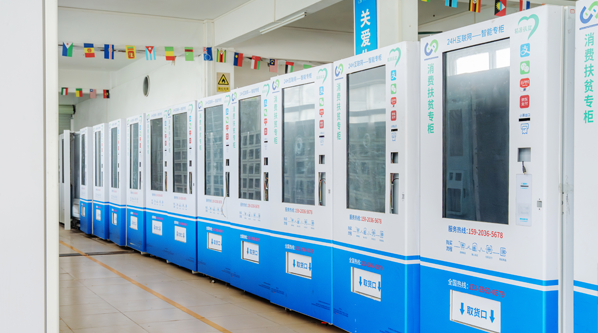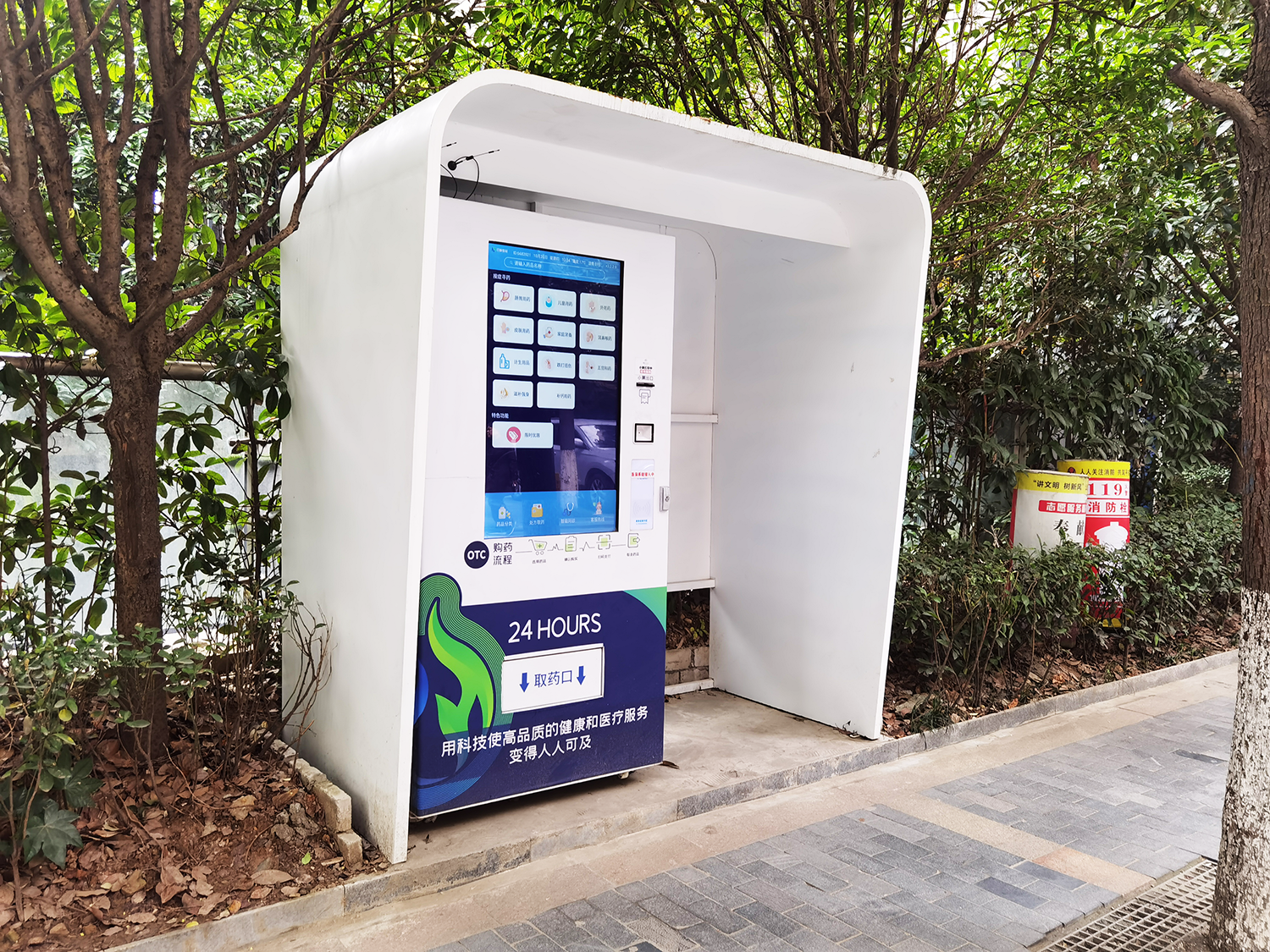
With the intensifying global aging population and surging demand for digital health, the pharmaceutical retail industry is undergoing a technology-driven profound transformation. AI-driven vending pharmacies are transitioning from concept to large-scale application, bringing an efficiency revolution and new commercial opportunities to B2B scenarios such as hospitals, chain pharmacies, corporate campuses, and community clinics. This article will analyze the core value behind this trend through real-world cases and industry data.
I. Cost Reduction and Efficiency Improvement: How Automation Technology Optimizes Operational Costs
1. 24/7 Unmanned Service
Traditional pharmacies are constrained by staffing and business hours, while AI-powered automated pharmacies enable round-the-clock service. In a pilot of AI vending terminals in California, USA, prescription pickups during non-business hours accounted for 34%, and patient satisfaction increased by 22%.
2. Reduced Human Error and Intelligent Inventory Management
AI systems, through visual recognition and predictive algorithms, have reduced dispensing error rates to below 0.01% (compared to an average error rate of 1.7% in traditional pharmacies). After introducing AI automated pharmacies, a Japanese chain pharmacy achieved a 40% improvement in inventory turnover efficiency and a 60% reduction in stockouts.
II. Technological Core: How AI Enables Safety and Personalized Services
1. Identity Verification and Prescription Review
Through facial recognition, health insurance card verification, and AI prescription review systems, medication safety is ensured. Case Study: Ping An Health’s “AI Smart Medicine Cabinet,” deployed in over 500 medical institutions in China, connects directly with the National Health Commission system, improving prescription review efficiency by 90% (Source: Ping An Health 2023 Technology White Paper).
2. Chronic Disease Management and Data Insights
AI terminals can integrate health monitoring devices, forming a “testing-prescription-dispensing” closed loop. For example, a U.S. company using AI vending terminals to manage diabetic patients improved medication adherence by 35% and reduced average blood glucose levels by 18%.

III. Commercialization Scenarios: B2B Implementation Cases and Revenue Models
1. Hospital Scenario: Alleviating Pharmacy Pressure
Mayo Clinic deployed an AI automated pharmacy in its emergency department, reducing wait times for non-urgent prescription pickups from 50 minutes to 2 minutes, freeing pharmacists to focus on critical care services (Source: Mayo Clinic Center for Innovation Report, 2022).
2. Corporate Wellness Centers: Employee Health Management
Google’s Silicon Valley headquarters provides employees with an AI self-service pharmacy, covering over-the-counter and chronic disease medications. Data shows a 28% reduction in employee absenteeism due to minor illnesses (Source: Google Workplace Analytics internal data, 2023).
3. Communities and Remote Areas: Bridging the Healthcare Gap
Canadian telehealth company Maple deployed AI medicine cabinets in remote northern communities,配合 remote consultations, reducing the average time for residents to obtain prescription medications from 3 days to 30 minutes (Source: Health Canada pilot evaluation, 2023).
IV. Industry Data and Market Size
The global automated pharmacy market is projected to grow from $1.8 billion in 2023 to $5.2 billion by 2030, with a compound annual growth rate (CAGR) of 16.3% (Source: Grand View Research, 2024).
Over 67% of U.S. hospital administrators plan to implement AI-driven medication management systems within the next three years (Source: American Hospital Association (AHA) survey, 2023).

V. Challenges and Future Trends
1. Regulation and Compliance
Regulatory policies for AI in pharmaceuticals are still evolving globally. For example, the FDA issued the “Artificial Intelligence in Medical Devices and Pharmaceutical Applications Guidance” in 2023, emphasizing algorithm transparency and clinical validation (Source: FDA website).
2. Technological Integration Directions
Future AI automated pharmacies will integrate with the Internet of Things (IoT) and blockchain traceability systems to achieve end-to-end drug supply chain traceability. Pfizer has piloted a blockchain-based AI medicine cabinet in Europe, improving anti-counterfeiting verification efficiency by 99.8% (Source: Pfizer Supply Chain Innovation Report, 2024).
Conclusion
AI-driven automated pharmacies represent not only a technological iteration but also a restructuring of the pharmaceutical supply chain. For B2B operators, they signify lower operational costs, broader service coverage, and data-driven health management capabilities. Against the dual backdrop of uneven distribution of medical resources and digital transformation, taking the lead in building an AI-powered pharmaceutical service ecosystem will become a core competitive advantage for medical institutions and pharmaceutical retailers.