
Currently Empty: $0.00

2026-06-24
0 Comments
The 3 AM Problem Nobody Talks About
Let me set the scene.
It’s 3:00 AM at a 24-hour manufacturing plant. A worker develops a pounding headache. The on-site nurse left at 5 PM. The nearest 24-hour pharmacy is 20 minutes away. Their only option? Either tough it out (reduced productivity, potential safety risk) or leave their post (lost production time).
Or take a university campus during finals week. A student with allergies is up studying. The campus health center closed at 6 PM. They can’t drive—they don’t have a car on campus.
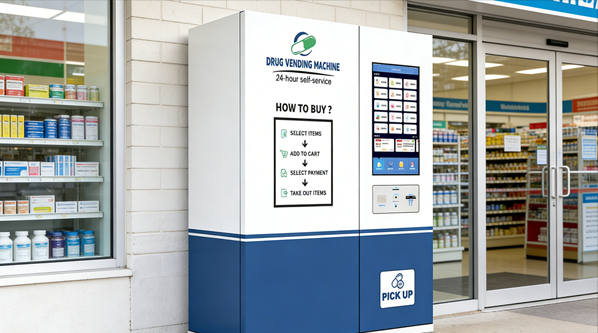
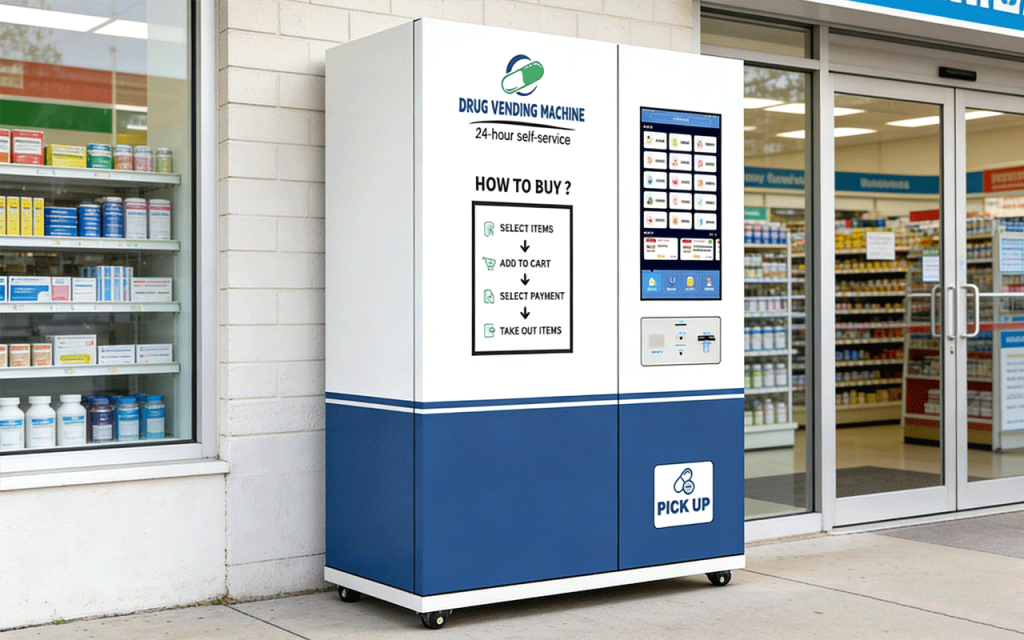
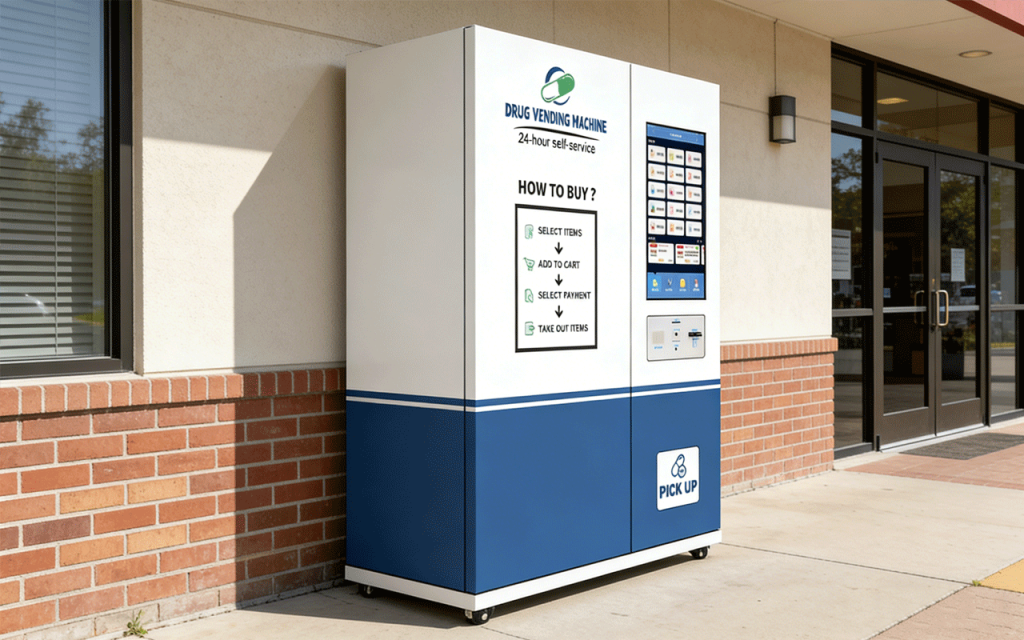
This isn’t a niche problem. It’s a daily reality in thousands of facilities worldwide. And the solution? A specialized OTC medicine vending machine—but not the basic kind you might imagine.
What I’ve Learned About This Industry
I’ve spent the better part of a decade in automated retail, working directly with hospitals, universities, and Fortune 500 facilities. Here’s the uncomfortable truth:
Snack vending is easy. Pharmaceutical vending is not.
You can’t just retrofit an old candy machine with some pain relievers and call it a day. OTC medications are regulated products with specific storage, security, and compliance requirements. Get it wrong, and you’re not just losing money—you’re exposing yourself to serious liability.
But when you get it right? It’s one of the most resilient, recession-proof revenue streams in automated retail. People don’t stop getting headaches, allergies, or motion sickness. Ever.
What Actually Makes an OTC Vending Machine Different
Standard vending machines drop products through a spiral mechanism. That’s fine for bags of chips. It’s not fine for delicate blister packs that can crack, or boxes that can crumple on impact.
Our advanced machines use three distinct delivery mechanisms:
Precision Conveyor Belts: Gently transport flat-pack items (like individual allergy foil packs) to the drop zone without damage.
Spiral Product Coils: Ideal for boxed items like pain reliever cartons, these rotate precisely to release one unit at a time.
Intelligent Elevator Drop Mechanisms: The elevator physically descends to the product, retrieves it, and delivers it to the collection bin with zero free-fall. This is non-negotiable for glass bottles or fragile diagnostic kits.
The Engineering Requirements That Matter (Beyond the Brochure)
When evaluating an OTC medicine vending machine, don’t get distracted by flashy touchscreens. Here’s what actually keeps you compliant and profitable:
Temperature Control Is Not Optional
Many over-the-counter medications—particularly those with active ingredients like ibuprofen, antihistamines, or liquid formulations—specify storage below 25°C (77°F) . Exceed that, and potency degrades. In a hot warehouse or unairconditioned transit hub, ambient temperatures can easily hit 35°C.
Our machines maintain a stable 15°C–22°C environment using commercial-grade cooling systems, with redundant digital thermostat sensors that trigger alerts if temperature fluctuates even 2°C outside the set range.
Real-world example: A client in Dubai deployed our temperature-controlled units in an outdoor transit hub. After 18 months, zero product degradation claims. That’s the difference proper engineering makes.
Security: Because Medications Are High-Value Targets
Vending machines with pharmaceuticals are prime targets for theft. We build in:
- Reinforced double-pane tempered glass that resists smash-and-grab attempts
- Triple-locking anti-theft cash vaults (electronic + mechanical deadbolts)
- Internal security shutters that physically block access to the storage area from the collection bin—even if someone reaches in, they can’t access inventory
Expiration Tracking That Saves Your Reputation
This is where most operators get burned. You load 100 boxes of allergy medication. Six months later, 40 boxes expired because you forgot to rotate stock.
Our cloud-based management platform automatically:
- Tracks expiration dates for every individual SKU
- Sends push notifications when any batch approaches 60 days from expiry
- Generates reports showing exactly which inventory needs to be pulled or discounted
- Can even lock out sales for expired products automatically
One client told me this feature alone saved them over $12,000 in wasted inventory in their first year.
Where These Machines Actually Generate Revenue
Based on deployment data across multiple sectors:
🏭 Corporate Headquarters & Manufacturing Plants
Absenteeism costs U.S. employers over $225 billion annually** (CDC data). Quick access to OTC relief keeps workers on the job. We’ve seen machines in factories generating **$800–$2,500 in monthly revenue with restocking frequency of just 1–2 times per week.
🏫 University Campuses
Student health centers are overwhelmed and understaffed. OTC vending in residence halls and student unions sees peak transaction volumes during exam periods—often 3x normal daily averages. One large state university reported 4,200 transactions in a single finals week from just two machines.
🏨 Hotels & Transportation Hubs
Travelers are a captive, high-willingness-to-pay audience. Jet lag, headaches, motion sickness, allergies—these are 3 AM problems when local pharmacies are closed. Hotels are increasingly positioning these machines as a premium amenity that differentiates them from competitors.
🏢 Government & Municipal Buildings
Public-facing facilities frequently need to provide emergency health access to citizens and employees alike, with the added benefit of reducing strain on front-desk staff who are tired of being asked for a band-aid or pain reliever.
The ROI Math (For the Numbers People)
Let’s run a realistic scenario:
Average item price: $4–$12 (pain relievers, allergy meds, first-aid kits)
Average daily transactions: 20–35 (conservative for a 24/7 location with 500+ occupants)
Monthly revenue: $2,400–$12,600
Monthly cost of goods (COGS): Typically 40–50% of retail price
Gross margin: 50–60%
Monthly operating costs (electricity, telemetry fees, restocking labor): ~$300–$700
Typical payback period: 10–16 months
The real financial advantage? Recurring revenue. Unlike snack vending, pharmaceutical vending has sticky, predictable demand. People buy specific products on a consistent basis, making inventory forecasting much more accurate.
Compliance: The Elephant in the Room
Age Verification
In many jurisdictions, certain OTC medications (like cough suppressants containing dextromethorphan) have age restrictions. Our machines support:
- ID/passport scanners for physical verification
- Touchscreen age-gate prompts (with AI facial age estimation for jurisdictions that allow it)
- Integration with government ID databases (available in select regions)
Local Regulatory Variations
OTC vending regulations vary dramatically by country and even by state/province. Working with a manufacturer who understands these variations is critical. For example:
- Japan: OTC vending is highly regulated with specific machine certifications required
- USA: State-level pharmacy boards have varying requirements, with some requiring on-site pharmacist oversight for certain products
- EU: CE marking and specific temperature logging requirements are mandatory
- UAE: Strict humidity control additional to temperature due to desert climate
We’ve seen operators buy cheap machines from generalist manufacturers only to discover they can’t legally deploy them in their target locations. That’s an expensive lesson.
Customization: Why Factory-Direct Matters
If you’re buying multiple units or expanding a franchise, cookie-cutter machines won’t cut it. Here’s what we customize for clients:
Multi-Size Drawer Configurations
Pharmaceutical packaging varies wildly:
- Flat foil blister packs (allergy meds)
- Small cardboard boxes (pain relievers, 10-packs)
- Larger boxes (first-aid kits, 100-count bottles)
- Cylindrical bottles (eye drops, liquid medications)
We configure internal trays to maximize capacity for your specific product mix, not a generic one-size-fits-all layout.
Payment Integration
Your machine needs to accept:
- EMV chip credit/debit cards (global standard)
- NFC mobile wallets (Apple Pay, Google Pay, Samsung Pay)
- Local QR payment systems (WeChat Pay, Alipay, PayPay, etc.)
- Closed-loop corporate ID badges (for office deployments)
- Campus card systems (for universities)
We’ve integrated with over 50 different payment processors globally. This isn’t trivial—each requires certification and testing.
User Interface Customization
The touchscreen should reflect:
- Your brand identity (colors, logos)
- Local languages (we support 30+ languages)
- Accessibility features (large text, audio assistance, high-contrast modes)
- Regulatory disclaimers specific to your jurisdiction
Anti-Tamper Hardware
Beyond physical security, we offer:
- Tamper-evident seals on all product compartments
- Internal motion sensors that detect unauthorized access attempts
- Remote camera monitoring integration
The Pitfalls I’ve Seen Operators Make
1. Skipping Temperature Control
“I’ll just put it in an air-conditioned lobby,” they say. Then the A/C fails during a heatwave, and they lose an entire inventory batch. Never skip climate control.
2. Overstocking Unpopular Items
Just because a product sells well in a pharmacy doesn’t mean it sells well in a vending machine. Start with a small test inventory and scale based on real data from your specific location.
3. Ignoring Expiration Alerts
When you’re managing multiple machines across different sites, manual expiration tracking is impossible. The operators who succeed are the ones who use automated telemetry religiously.
4. Underestimating Security
I’ve heard nightmare stories of entire machines being stolen from remote locations. If you’re deploying in a high-risk area, invest in GPS tracking, reinforced anchoring, and remote lockdown capabilities.
5. Not Planning for Restocking Labor
This sounds obvious, but I’ve seen operators plan for “occasional” restocking only to realize they need daily visits during high-demand seasons. Factor in labor costs realistically.
My Honest Take on the Future of This Sector
Healthcare access is only going to become more decentralized. The pandemic accelerated a shift toward self-service healthcare, and vending machines are part of that ecosystem.
But here’s my prediction: The market will split into two tiers.
Tier 1 (Low-end): Basic temperature-controlled boxes selling only the most common pain relievers and allergy meds. Cheap, high-volume, low-margin.
Tier 2 (Premium): Smart, telemetry-driven, fully compliant machines with age verification, remote management, and cold chain monitoring. Higher upfront cost, but defensible margins and longer-term contracts with institutional clients.
If I were entering this market today, I’d go Tier 2 every time. The compliance barriers create a moat that keeps out low-quality competitors.
Questions for You
- Have you seen OTC vending machines in your workplace or campus? Would you use one?
- For facility managers: What’s holding you back from deploying one? Cost? Compliance concerns? Staff resistance?
- For existing vending operators: Are you considering adding pharmaceutical products to your portfolio? What’s your biggest hesitation?
Drop your thoughts below. I’m happy to go deeper into any specific aspect—cost breakdowns, regulatory specifics by region, technical specs, or supplier sourcing.
Final Bottom Line
Deploying an OTC medicine vending machine isn’t just about selling products. It’s about providing an essential service that improves safety, reduces absenteeism, and enhances occupant well-being. When done right, it’s also one of the most stable, high-margin automated retail opportunities available today.
Disclosure: I work with a specialized vending machine manufacturer, so I’m certainly biased toward quality equipment. But I’ve also been burned by cheap machines in my earlier career, and I’ve seen what happens when operators cut corners on compliance. I share these insights so you can avoid the mistakes I’ve made.