
Currently Empty: $0.00

2026-07-03
0 Comments
Introduction: The New Frontier in Preventive Healthcare
Healthcare is undergoing a fundamental transformation. The traditional model of waiting until symptoms appear before seeking medical attention is rapidly being replaced by a proactive, data-driven approach to wellness. At the heart of this revolution stands the Multiple Functional Health Check Station—a sophisticated, self-service kiosk that puts clinical-grade health monitoring within arm’s reach of everyone.
These compact yet powerful devices represent a convergence of medical sensor technology, artificial intelligence, and cloud computing. In 2026, they have evolved from novelty gadgets into essential infrastructure for workplaces, retail spaces, public facilities, and healthcare systems worldwide. This comprehensive guide explores every facet of these innovative systems, helping you understand their capabilities, applications, and the transformative impact they can have on population health management.
Whether you’re a human resources director exploring workplace wellness solutions, a healthcare entrepreneur seeking investment opportunities, or a facility manager looking to enhance public health services, this guide provides the actionable insights you need to make informed decisions about Multiple Functional Health Check Stations.
Understanding Multiple Functional Health Check Stations
Definition and Core Concept
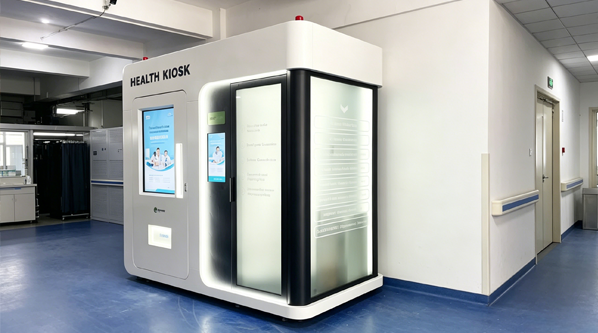
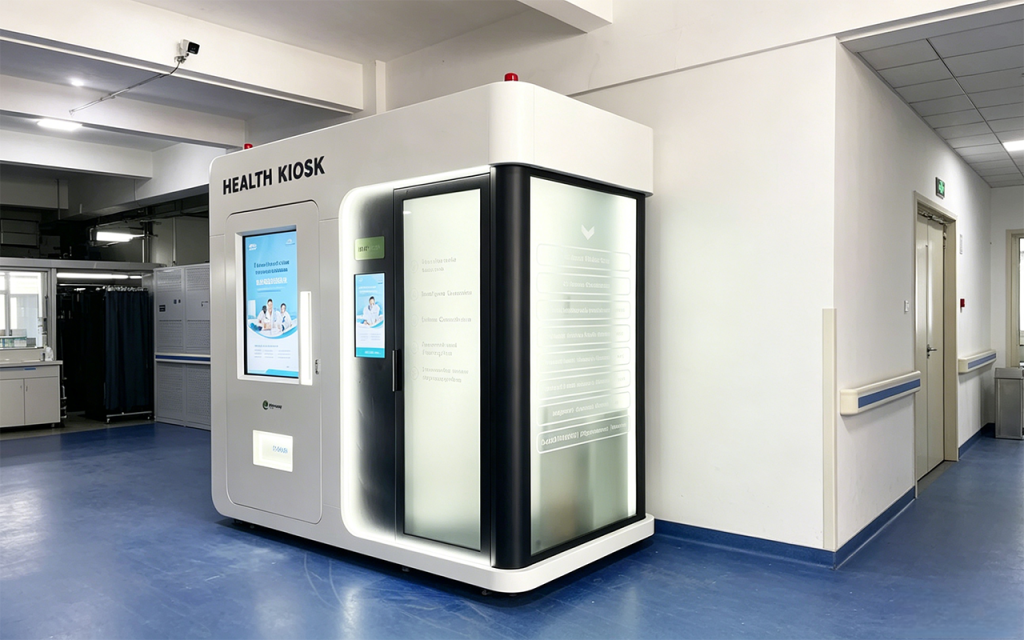
A Multiple Functional Health Check Station is an integrated, interactive kiosk that combines multiple medical-grade diagnostic sensors into a single, user-friendly platform. These stations enable individuals to conduct comprehensive health screenings independently, without requiring clinical supervision for basic measurements.
The fundamental philosophy behind these stations is accessibility. By removing barriers such as appointment scheduling, travel time, and waiting rooms, they encourage regular health monitoring. This frequent data collection creates longitudinal health profiles that can reveal subtle changes long before they manifest as symptoms.
Evolution of Health Screening Technology
The journey from simple blood pressure machines in pharmacies to today’s multifunctional stations reflects broader technological trends. Early devices offered single measurements—typically blood pressure or weight. The integration of multiple sensors, coupled with advances in miniaturization and computing power, has enabled today’s comprehensive platforms.
Modern stations represent the fifth generation of self-service health technology:
| Generation | Era | Key Features |
|---|---|---|
| First | 1990s-2000s | Single-function (blood pressure only) |
| Second | 2000s-2010s | Multiple functions but separate devices |
| Third | 2010s-2015 | Integrated platforms with basic connectivity |
| Fourth | 2015-2020 | Cloud-connected with data analytics |
| Fifth | 2020-present | AI-powered, predictive, fully integrated |
How These Systems Operate
The user journey through a health check station is engineered for simplicity and efficiency. Here’s what happens during a typical screening session:
Step 1: Identity Verification
Users authenticate themselves through multiple methods—facial recognition, fingerprint scanning, QR code from a mobile health app, or manual ID entry. This ensures results are properly attributed and creates a continuous health record.
Step 2: Menu Navigation
An intuitive touchscreen interface presents available tests. Users can select individual measurements or choose a comprehensive health assessment package. The system remembers previous selections for returning users.
Step 3: Guided Testing
The station provides step-by-step instructions through on-screen animations, voice guidance, and visual cues. This ensures proper technique—critical for accurate results.
Step 4: Data Capture
High-precision sensors collect physiological data. The system’s algorithms process raw signals, filtering out noise and artifacts to produce clean measurements.
Step 5: Intelligent Analysis
The station’s AI engine evaluates results against multiple reference points—clinical guidelines, user history, demographic norms, and contextual factors. This produces not just numbers but meaningful interpretations.
Step 6: Results Delivery
Findings appear on screen instantly. Users receive a personalized health report, which they can print, save to their mobile device, or have emailed. The report includes trend data, risk indicators, and actionable recommendations.
Step 7: Cloud Synchronization
All data transmits securely to cloud-based health records, creating a searchable, shareable health history accessible to authorized healthcare providers.
Core Technologies and Sensor Systems
Cardiovascular Monitoring
Oscillometric Blood Pressure Measurement
This technology detects arterial wall vibrations during cuff deflation to determine systolic and diastolic pressures. Advanced stations use algorithms that compensate for movement and arrhythmias, ensuring clinical-grade accuracy comparable to manual auscultation.
Photoplethysmography (PPG)
Optical sensors measure blood volume changes in microvascular tissues. Beyond heart rate, PPG enables pulse wave velocity analysis—a marker of arterial stiffness and vascular age. This provides insights into cardiovascular health that extend beyond simple blood pressure readings.
Body Composition Analysis
Bioelectrical Impedance Analysis (BIA)
BIA technology passes a low-level, imperceptible electrical current through the body to measure resistance and reactance. From these measurements, the system calculates:
- Body fat percentage
- Skeletal muscle mass
- Total body water
- Basal metabolic rate
- Visceral fat rating
- Bone mineral content
Modern stations use multifrequency BIA (at 5, 50, and 250 kHz) for greater accuracy, separating extracellular from intracellular water and providing more reliable body composition metrics.
Respiratory and Circulatory Function
Pulse Oximetry
Using light absorption at two wavelengths (660nm and 940nm), the station measures blood oxygen saturation (SpO2) and perfusion index. This is particularly valuable for identifying respiratory issues and monitoring conditions like sleep apnea or COVID-19 recovery.
Metabolic and Biochemical Screening
Advanced Sensors
Emerging stations incorporate non-invasive glucose monitoring using near-infrared spectroscopy or transdermal optical sensing. While still evolving, these technologies promise painless blood sugar tracking, representing a significant breakthrough for diabetes management.
Visual and Cognitive Assessment
Automated Vision Testing
Integrated visual acuity tests using standardized optotypes on high-resolution screens provide rapid vision screening. Some stations also offer color perception and contrast sensitivity tests.
Cognitive Screening Modules
Touchscreen-based reaction time tests and memory assessments provide baseline cognitive function metrics. These can be particularly valuable for monitoring neurological health in aging populations.
The AI Intelligence Layer
Transforming Data into Insights
The true power of a Multiple Functional Health Check Station lies not in the sensors themselves but in the intelligence that processes their output. Artificial intelligence elevates these devices from measurement tools to diagnostic support systems.
Advanced Pattern Recognition
AI algorithms identify patterns that would escape human observers. For example, the relationship between blood pressure variability, heart rate recovery time, and body composition changes can reveal early indicators of metabolic syndrome—often years before any single measurement would raise concern.
Predictive Health Modeling
By building personalized health baselines and tracking deviations over time, AI can forecast future health trajectories. A user whose visceral fat trends upward alongside declining HRV might receive an early warning about cardiovascular risk, with specific lifestyle recommendations tailored to their profile.
Continuous Learning Systems
The AI improves over time. As more users interact with the station, algorithms refine their ability to identify subtle patterns, adjust to population-specific variations, and personalize risk assessments. Privacy-preserving federated learning allows networks of stations to share insights without exposing individual data.
Deployment Applications Across Industries
Corporate Wellness Programs
Forward-thinking companies view health check stations as strategic investments. In workplace settings, these stations serve multiple purposes:
Employee Health Promotion
Regular screenings encourage employees to take ownership of their health. The visibility of the station serves as a constant reminder of the organization’s commitment to wellbeing.
Program Effectiveness Tracking
HR teams can measure the impact of wellness initiatives against objective health data, justifying continued investment.
Stress Management
HRV and stress index measurements help identify employees who may benefit from additional support, enabling early intervention before burnout develops.
Public Health Infrastructure
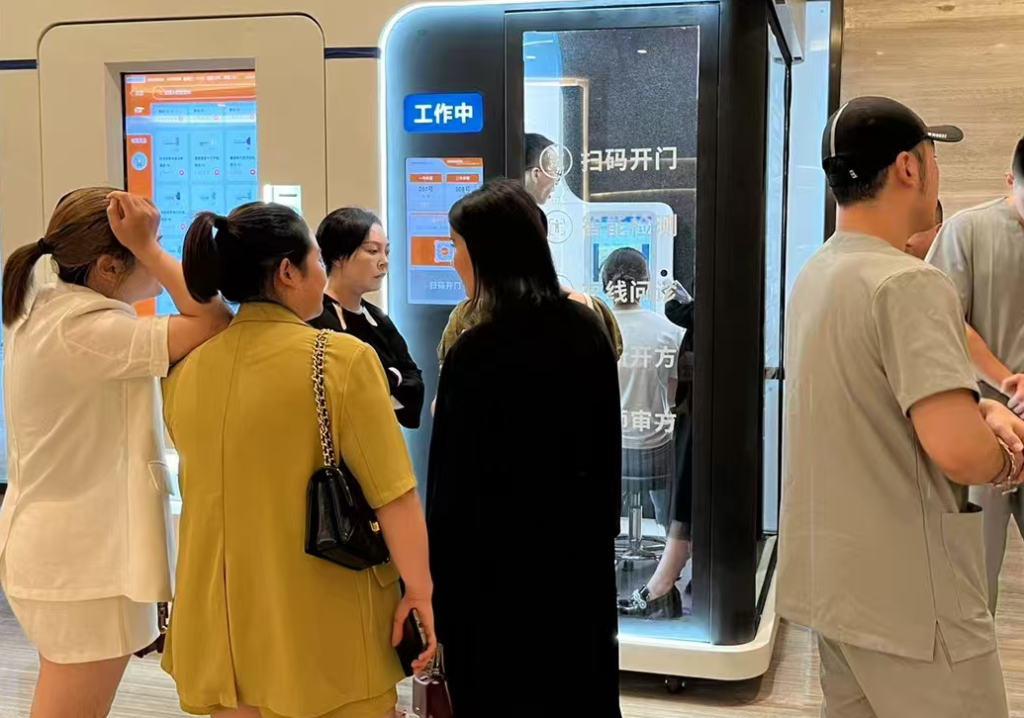
Cities worldwide are deploying health stations in public spaces to democratize access to health monitoring:
Transportation Hubs
Airports and train stations offer travelers quick health checks, providing peace of mind for journeys and early detection for those who might otherwise defer care.
Community Centers
Underserved communities gain access to health screening without needing primary care appointments, helping address health disparities.
Emergency Preparedness
During disease outbreaks, public stations can rapidly screen populations, identifying potential cases and reducing transmission in public spaces.
Retail and Pharmacy Environments
Pharmacies have embraced health stations as traffic drivers and service enhancers:
Value-Added Services
Health screenings attract customers who may also purchase health-related products.
Pharmacist-Patient Interaction
Screening results generate conversations between pharmacists and customers, leading to medication consultations and referrals to primary care.
Revenue Generation
Some pharmacies offer premium screening packages at a fee, creating new revenue streams while building customer loyalty.
Healthcare Systems
Hospitals and clinics use health stations to improve operational efficiency:
Patient Triage
Self-service screenings in waiting areas provide clinicians with baseline data before consultations.
Chronic Disease Management
Patients with conditions like hypertension or diabetes use stations for frequent monitoring between visits.
Population Health Research
Aggregated, anonymized data helps healthcare systems understand community health needs.
Senior Living Facilities
For older adults, health stations provide crucial safety and independence support:
Daily Wellness Checks
Simple, automated daily monitoring detects changes that might otherwise go unnoticed.
Family Peace of Mind
Authorized family members can view loved ones’ health trends remotely, reducing anxiety.
Fall Risk Assessment
Some stations incorporate balance and mobility testing, helping identify seniors at risk of falls.
Financial Considerations and ROI Analysis
Calculating Return on Investment
The business case for health check stations involves multiple financial dimensions:
Direct Healthcare Cost Reduction
Early detection of conditions like hypertension saves approximately $1,200 per employee annually. Diabetes detection and management can save $5,000 per patient per year.
Insurance Premium Impact
Employers with documented wellness outcomes may qualify for group health insurance discounts of 5-15%.
Productivity Gains
Healthier employees are more productive, with studies showing wellness programs generate $3-6 in productivity gains per dollar invested.
Reduced Turnover
Companies demonstrating genuine commitment to wellbeing experience 20-30% lower turnover rates.
Total Cost of Ownership Considerations
Capital Expenditure
Hardware costs vary widely. Basic stations start at approximately $10,000, while comprehensive medical-grade systems can exceed $50,000.
Software and Cloud Subscriptions
Monthly fees for software updates, cloud storage, and AI analytics typically range from $100-500 per month.
Maintenance and Calibration
Annual professional calibration costs approximately $500-1,500. Ongoing maintenance contracts add 5-10% of hardware cost annually.
Consumables and Supplies
Budget approximately $50-100 per 1,000 screenings for disposable items.
Staff Training
Allocate 5-10 hours of training per location.
Typical ROI Timeline
Organizations can expect:
- 0-6 months: Implementation and user adoption phase
- 6-12 months: Data collection begins showing health trends
- 12-18 months: ROI becomes positive through reduced costs
- 24+ months: Significant cost savings; data-driven insights optimize investments
Selecting the Right Health Check Station
Critical Evaluation Criteria
Regulatory Compliance and Certification
- FDA 510(k) clearance or CE marking for all medical sensors
- Compliance with local health regulations and data protection laws
- Third-party validation of accuracy claims
Scalability and Integration
- Ability to add sensors or features without replacing hardware
- Open API architecture for integration with existing wellness platforms
- Support for single sign-on and enterprise identity management
User Experience Design
- Intuitive interface requiring minimal training
- Multilingual support for diverse populations
- Accessibility features for users with disabilities
Data Governance
- End-to-end encryption for data in transit and at rest
- Granular consent controls for data sharing
- Anonymization capabilities for aggregate analysis
Reliability and Uptime
- Mean time between failures exceeding 50,000 hours
- Remote diagnostics for rapid issue resolution
- Automatic software updates and security patches
Vendor Assessment
- Track record in healthcare technology
- Financial stability and long-term viability
- Quality of technical support and customer service
Implementation Best Practices
Location Selection
Place stations in high-traffic areas with privacy considerations. Avoid direct sunlight, which can interfere with optical sensors.
Privacy Design
Position screens with visibility limited to the user. Consider sound-absorbing materials for noise-sensitive environments.
User Education
Develop clear signage and digital tutorials explaining station purpose and operation. Consider launch events to drive initial adoption.
Staff Support
Designate wellness champions who can assist users and answer questions during peak usage.
Data Security and Privacy
Regulatory Framework
Health check stations must navigate a complex regulatory landscape:
United States
- HIPAA compliance for protected health information
- State-specific privacy laws like California’s CCPA
- FDA oversight for medical devices
European Union
- GDPR requirements for data protection
- Medical Device Regulation (MDR) certification
- Cross-border data transfer restrictions
Security Architecture Best Practices
Authentication
Multi-factor authentication for administrative access. Biometric verification for user identification.
Encryption
AES-256 encryption for data at rest. TLS 1.3 for data in transit.
Audit Trails
Comprehensive logging of all data access and system changes. Tamper-proof audit records.
Incident Response
Clear protocols for breach notification. Regular penetration testing and vulnerability assessments.
The Future of Health Screening Technology
Emerging Capabilities
Digital Twins and Simulation
By 2028, health stations will create predictive digital twins—virtual representations of individual health that simulate how lifestyle changes might affect future health markers.
Non-Invasive Blood Analysis
Breakthroughs in optical sensing will enable stations to measure glucose, cholesterol, and triglycerides without needles, dramatically expanding screening capabilities.
Mental Health Assessment
Advanced AI analyzing facial expressions and speech patterns will detect early indicators of depression, anxiety, and cognitive decline.
Environmental Health Integration
Future stations will integrate environmental sensors, correlating air quality and temperature with physiological data.
Technological Convergence
Wearable Integration
Health stations will synchronize with smartwatches and fitness trackers, combining continuous monitoring with periodic clinical-grade measurements.
Telemedicine Gateway
Seamless integration with telehealth platforms will enable users to share station results instantly with providers during virtual consultations.
Blockchain for Health Records
Distributed ledger technology may provide immutable health records that users control, sharing selectively with providers.
Societal Implications
Health Equity
Widespread deployment of health stations in underserved communities could address healthcare disparities.
Data-Driven Public Health
Aggregated health data from millions of stations will provide unprecedented insight into population health trends.
Personal Responsibility
Health stations shift the paradigm toward patient-centered care, empowering individuals to take greater responsibility for their health.
Conclusion
The Multiple Functional Health Check Station represents more than technological innovation—it embodies a fundamental shift in how we approach health and wellness. By making comprehensive health screening accessible, convenient, and intelligent, these stations empower individuals, enable early intervention, and transform healthcare from reactive treatment to proactive management.
For organizations across all sectors, the business case is compelling. Beyond the measurable ROI from reduced healthcare costs and improved productivity, health stations demonstrate a commitment to wellbeing that attracts talent, builds loyalty, and strengthens brand reputation.
As technology continues to evolve, these stations will become even more capable, integrating advanced diagnostics, predictive analytics, and seamless care coordination. The future of health is decentralized, data-driven, and democratized—and the health check station is at the forefront of this transformation.
Whether you are considering deployment for your workplace, community, or healthcare practice, the time to act is now. The technology is mature, the benefits are proven, and the potential for positive impact is immense. In 2026, the question is no longer whether to implement health screening stations, but how quickly you can bring their benefits to your population.