
Currently Empty: $0.00

2026-10-20
0 Comments
Introduction
Healthcare providers, pharmacies, community healthcare operators, and corporate wellness managers are increasingly looking for convenient ways to provide routine health screening. A multiple functional health check station combines several health measurement functions in one integrated platform, helping organizations make selected health checks more accessible and organize screening activities more efficiently.
However, choosing the right equipment involves more than comparing screen sizes or counting the number of measurement functions. Buyers also need to consider measurement requirements, user experience, software capabilities, installation conditions, maintenance, and long-term supplier support.
For businesses and healthcare organizations planning to introduce self-service health screening, understanding these factors is essential to selecting a solution that fits the intended application.
This guide explains what to look for when evaluating a multiple functional health check station, how to compare configurations, and which questions to ask a supplier before making a purchasing decision.
What Is a Multiple Functional Health Check Station?
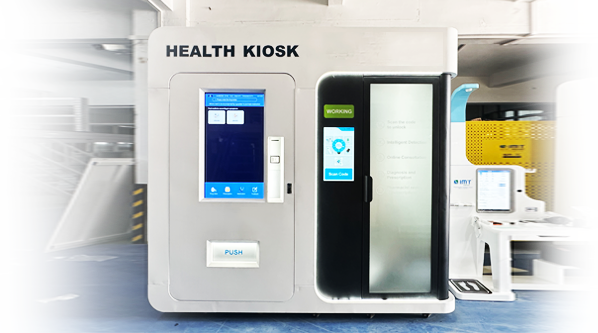
A multiple functional health check station is an integrated kiosk designed to support several health measurement and screening activities in one location. Depending on the model and configuration, it may combine multiple measurement modules with a touchscreen interface, health data management functions, and automated report generation.
Instead of requiring users to visit separate devices for different measurements, an integrated station provides a centralized platform for selected health checks.
Depending on the available configuration, measurement options may include:
- Blood pressure measurement
- Heart rate monitoring
- Blood oxygen saturation measurement
- Height and weight measurement
- Body mass index (BMI) calculation
- Body composition analysis
- Body temperature measurement
- Blood glucose measurement
- Vision testing or electrocardiogram (ECG) recording
Not every health check station includes all these functions. The actual measurement capabilities depend on the installed modules, model specifications, software, and applicable regulatory requirements.
Before purchasing, buyers should request a detailed specification sheet to confirm which functions are included as standard and which require additional modules.
Key Benefits of a Multiple Functional Health Check Station
1. Integrated Health Measurement
An integrated health check station brings compatible measurement functions together in one location. This can simplify the screening process for organizations that need to provide several types of routine measurements.
For example, a community healthcare facility may require blood pressure, heart rate, height, weight, and BMI measurements, while another project may need additional modules.
Selecting a configuration based on actual user requirements helps avoid unnecessary equipment costs and complexity.
2. Convenient Self-Service Screening
A touchscreen interface can guide users through available measurement procedures and provide instructions at each stage.
For public installations, a clear interface, appropriate language options, accessible controls, and easy-to-clean surfaces can improve the user experience.
The level of staff supervision required should be determined by the intended users, measurement procedures, and local requirements.
3. Health Data Management
Depending on the software configuration, a multiple functional health check station may support measurement records, report generation, data upload, or connection to a compatible health management platform.
Organizations evaluating these features should confirm how data is collected, stored, transferred, and accessed. Data privacy, user consent, access permissions, and information security should be considered before deployment.
4. Flexible Deployment Options
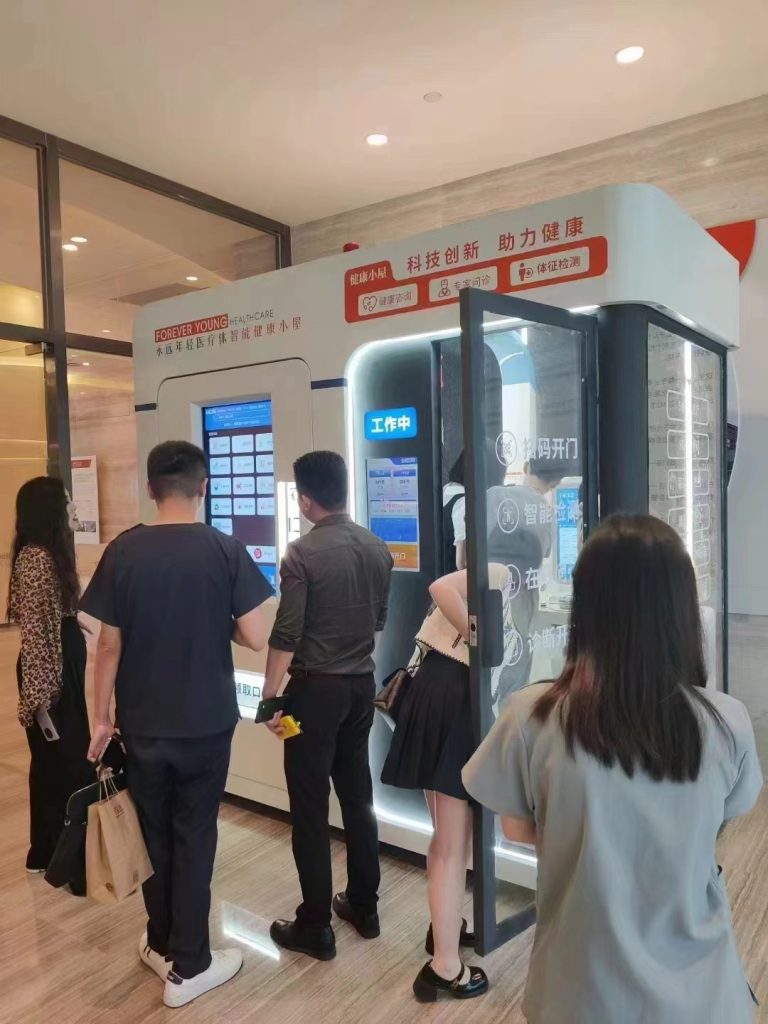
Integrated health screening equipment can be considered for different environments, including clinics, pharmacies, residential communities, corporate offices, senior care facilities, and public service locations.
The most appropriate installation depends on user demand, available space, network connectivity, privacy requirements, maintenance arrangements, and the purpose of the screening program.
Where Can Multiple Functional Health Check Stations Be Used?
Clinics and Healthcare Facilities
Healthcare facilities may use health check stations to support selected preliminary measurements and organize routine screening workflows. The equipment should complement established clinical procedures rather than replace professional medical assessment.
Pharmacies and Community Healthcare Centers
Pharmacies and community healthcare operators may consider health check stations as an additional service for visitors who want convenient access to basic health measurements.
The available functions should match the needs of the intended users and the services that the facility is authorized to provide.
Corporate Offices and Industrial Sites
Companies may introduce health check stations as part of employee wellness programs. Depending on the configuration, employees can access selected measurements in a dedicated area without requiring multiple separate devices.
Before deployment, employers should establish appropriate procedures for handling employee health information and responding to results that require professional follow-up.
Residential Communities and Senior Care Facilities
Residential communities and senior care facilities may use integrated screening equipment to make routine measurements more accessible to residents.
Important considerations include ease of operation, accessibility, cleaning, maintenance, user assistance, and a clear process for referring individuals to qualified healthcare professionals when needed.
How to Choose the Right Multiple Functional Health Check Station
Step 1: Define Your Required Measurement Functions
Start by listing the measurements required for your project.
For example, a basic screening program may prioritize blood pressure, heart rate, height, weight, and BMI. A more advanced configuration may require additional measurement modules.
Ask the supplier to provide a model-specific list of supported functions and clearly identify optional equipment.
Step 2: Compare Technical Specifications
Technical specifications help buyers determine whether a station is suitable for the intended environment.
Important items to review include:
- Overall dimensions and installation footprint
- Touchscreen size and user interface
- Supported measurement modules
- Power supply and network requirements
- Report generation and data export options
- Software interfaces and system compatibility
- Cleaning and maintenance requirements
Do not compare equipment based on the number of functions alone. Measurement capabilities, operating procedures, documentation, and software compatibility are equally important.
Step 3: Evaluate Software and Data Integration
For projects involving multiple locations or centralized management, software capabilities can be an important purchasing factor.
Ask whether the proposed configuration supports health record management, report generation, remote monitoring, data export, or integration with existing platforms.
Confirm any additional software fees, integration costs, hosting requirements, and data security responsibilities before finalizing the purchase.
Step 4: Check Product Documentation and Compliance
Health measurement equipment may be subject to different requirements depending on its intended use, the measurement technology, and the destination market.
Request the relevant technical documentation, applicable certifications, operating instructions, and information about the limitations of each measurement function.
Avoid assuming that one certification automatically covers every module or intended use. Confirm the documentation for the specific model and configuration being purchased.
Step 5: Review Customization and After-Sales Support
For distributors, healthcare projects, and system integrators, customization and support can influence the long-term value of an investment.
Discuss options such as appearance customization, language settings, compatible peripherals, software integration, and configuration adjustments.
Also clarify warranty terms, spare parts availability, maintenance procedures, technical support channels, and expected delivery times.
Why Consider IMT Multiple Functional Health Check Stations?
IMT provides multiple functional health check station configurations for organizations evaluating integrated health screening equipment.
Different projects may require different combinations of measurement modules, user interfaces, and software capabilities. Reviewing the actual configuration is therefore more useful than selecting a device based solely on its appearance or advertised function count.
You can explore the available models, product information, and configurations on the IMT Multiple Functional Health Check Station product category page.
When evaluating a solution, consider the following questions:
- Which health measurements are required for your project?
- How many users are expected to use the station?
- Where will the equipment be installed?
- Is health data management or software integration required?
- Which customization and after-sales services are available?
Providing these details helps clarify the equipment configuration and identify the most suitable solution for your application.
Frequently Asked Questions
What functions can a multiple functional health check station provide?
Depending on the model, available functions may include blood pressure, heart rate, blood oxygen saturation, height, weight, BMI, body composition, temperature, blood glucose, vision testing, or ECG recording. Buyers should confirm the exact functions supported by the selected configuration.
Can a multiple functional health check station operate without staff?
Some configurations support self-service measurements through a guided touchscreen interface. Whether staff supervision is necessary depends on the measurement procedures, intended users, applicable requirements, and arrangements for responding to results that need further assessment.
Can health check stations connect to a health management platform?
Some configurations support data upload, report generation, or integration with compatible systems. Buyers should confirm the available interfaces, software requirements, data security arrangements, and any additional integration costs.
How much does a multiple functional health check station cost?
The price depends on the selected measurement modules, screen configuration, software functions, customization requirements, and order quantity. Requesting a quotation based on a defined specification is the best way to compare different configurations accurately.
How can I choose a reliable health check station supplier?
Compare technical documentation, product specifications, relevant certifications, customization capabilities, software compatibility, warranty terms, spare parts availability, and technical support. Ask for actual product images, videos, and a detailed quotation for the intended configuration.
Conclusion
A multiple functional health check station can help healthcare providers, pharmacies, community operators, and businesses organize access to selected health measurements through an integrated platform.
Choosing the right equipment requires a clear understanding of the intended users, required measurement functions, software capabilities, installation environment, and applicable requirements. A careful comparison of specifications and supplier support can help reduce purchasing uncertainty and improve deployment planning.
If you are planning a health screening project, explore the IMT Multiple Functional Health Check Station product range to review available configurations.
For model recommendations, customization options, technical specifications, or a project quotation, contact the IMT team with your requirements. Include your target market, intended application, required measurement functions, estimated quantity, and software integration needs to help the team assess your project.
Choose a configuration that matches your operational needs and supports a practical, reliable health screening workflow.