
Currently Empty: $0.00

2026-06-24
0 Comments
Introduction
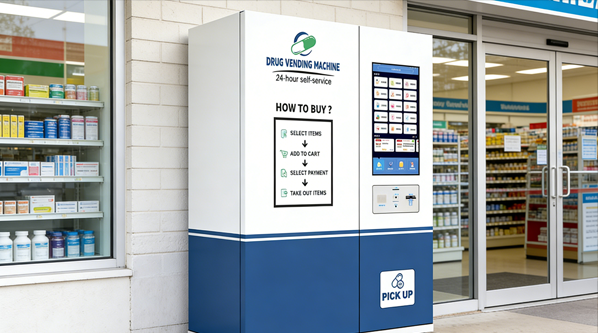
OTC medicine vending machines are changing how businesses provide convenient access to selected over-the-counter healthcare products. By combining automated dispensing with digital payment systems and inventory management, these machines can help approved locations make everyday health essentials available beyond traditional retail hours.
However, deploying an OTC medicine vending machine requires more than selecting equipment and stocking products. Businesses must consider local regulations, product eligibility, storage conditions, labeling, age restrictions where applicable, inventory controls, payment security, and ongoing maintenance.
For pharmacy operators, healthcare organizations, distributors, and vending businesses, a structured approach to compliance and safety can help reduce operational risks and support a more reliable customer experience.
This guide explains the key compliance questions, safety features, deployment steps, and operational procedures to evaluate before installing an OTC medicine vending machine.
For a broader overview of equipment types, applications, and purchasing considerations, read our guide to the OTC medication vending machine.
1. What Is an OTC Medicine Vending Machine?
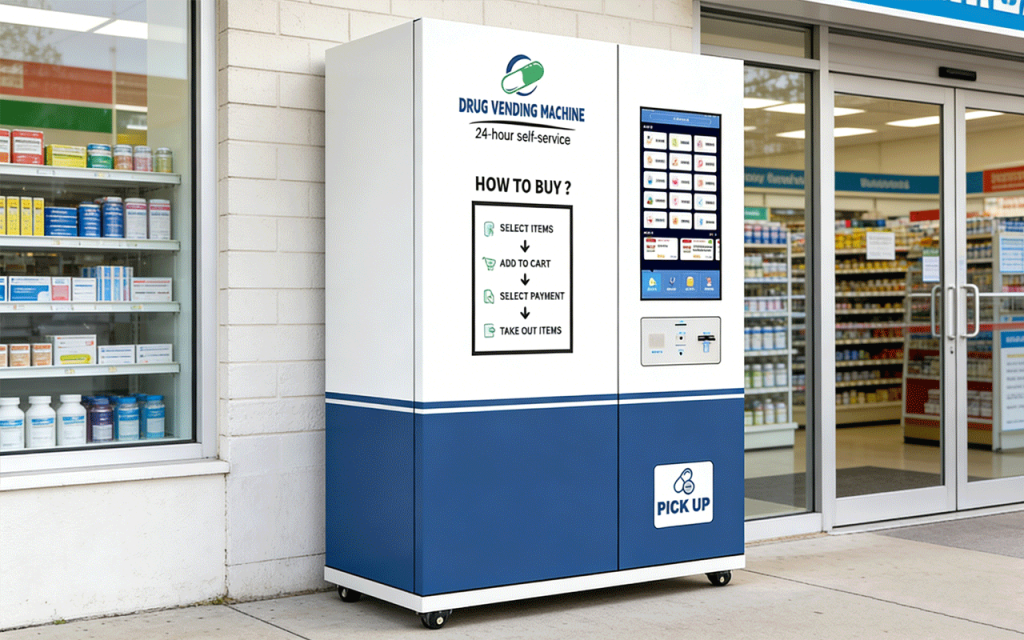
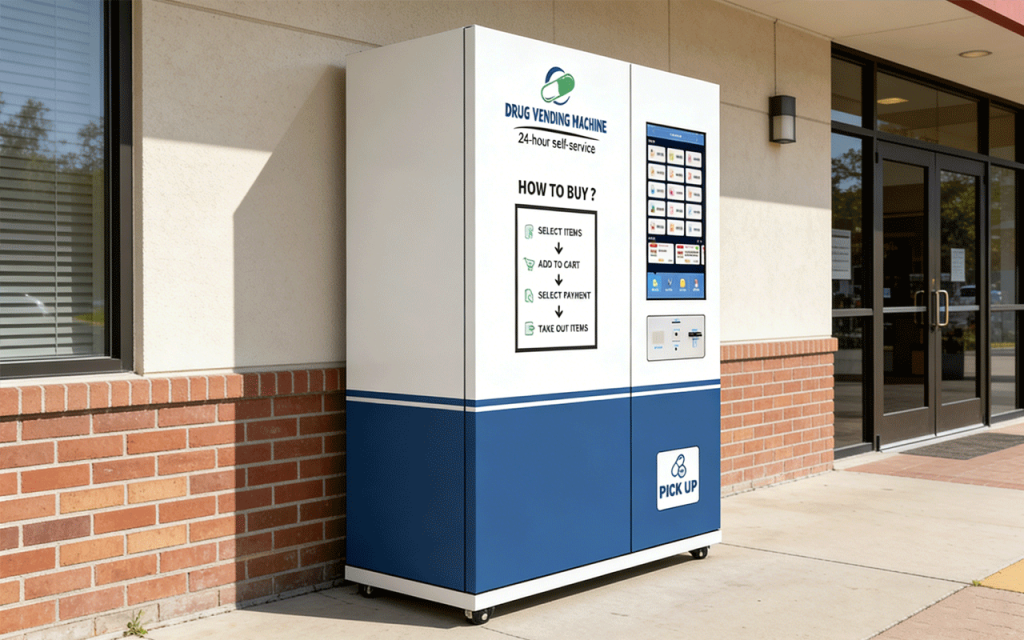
An OTC medicine vending machine is an automated dispensing system designed to sell eligible over-the-counter healthcare products without requiring a staffed checkout for each transaction.
Depending on the model and local requirements, a machine may support product selection through a touchscreen, electronic payments, automated dispensing, stock monitoring, and remote equipment management.
Potential product categories may include:
- Eligible non-prescription medicines
- First-aid supplies
- Basic personal care products
- Selected health and wellness essentials
The products that can be offered depend on the laws and regulations applicable to the installation location. A product that is available over the counter in a conventional store is not automatically permitted for unattended vending.
Before selecting products or configuring a machine, operators should confirm the applicable rules with the relevant local authority or a qualified compliance professional.
2. Understand Local Regulatory Requirements Before Deployment
Regulatory compliance is one of the first issues to address when planning an OTC medicine vending project.
Requirements vary by country, state, province, product category, and operating model. Some jurisdictions may impose restrictions on unattended medicine sales, while certain products may require additional safeguards or may not be suitable for vending at all.
Confirm Product Eligibility
Create a list of intended products and verify whether each item may legally be sold through an unattended vending machine in the target market.
Check for restrictions related to:
- Product classification and permitted sales channels
- Age requirements or customer verification
- Package size and labeling
- Storage and handling conditions
- Sales location and operating hours
- Required operator licenses or permits
Do not assume that all non-prescription medicines can be sold through the same vending configuration.
Check Licensing and Registration Requirements
Determine whether the business, operator, premises, products, or dispensing equipment require registration, licensing, permits, or other approvals.
Responsibilities may differ between the equipment supplier, vending operator, product supplier, and property owner. Clarify these responsibilities before signing a site agreement or purchasing equipment.
Review Consumer Information Requirements
Customers should be able to identify the product they are purchasing and access any required information, including product names, package details, warnings, instructions, and applicable labeling.
The machine’s user interface should not obscure mandatory information or create confusion about product selection.
Verify Requirements for Unattended Sales
Some markets may impose additional conditions on the sale of healthcare products without staff present. Depending on local rules and the selected product range, these may involve age checks, access restrictions, recordkeeping, or limitations on product categories.
Verify the requirements for the exact location and operating model rather than relying on a general assumption that OTC vending is permitted.
3. Product Storage and Environmental Safety
Appropriate storage is essential when vending products that have specified temperature, humidity, light, or handling requirements.
Different products may have different storage instructions. A machine should be selected and configured according to the requirements of the products it will dispense.
Review Manufacturer Storage Instructions
Check the storage instructions supplied with each product. Confirm whether the intended machine can maintain the required conditions under expected operating and environmental conditions.
Do not assume that every OTC medicine vending machine includes refrigeration, temperature regulation, or humidity control. These capabilities vary by model and must be verified in the technical specifications.
Monitor Environmental Conditions Where Necessary
For products that require controlled storage, evaluate whether the equipment can monitor the relevant environmental conditions and provide alerts when conditions move outside the specified range.
A monitoring system should support a clear response procedure, including inspection of affected stock and decisions about whether products remain suitable for sale.
Protect Products from Damage
The machine should protect stock from foreseeable damage during storage, dispensing, replenishment, and routine operation.
Consider package dimensions, dispensing pressure, vibration, exposure to light, and the potential for products to become trapped or damaged inside the mechanism.
Avoid Selling Compromised Products
Establish procedures for handling products that have been damaged, exposed to unsuitable conditions, recalled, or otherwise identified as unsuitable for sale.
Affected stock should be isolated from sale while the operator follows the relevant product instructions and local requirements.
4. Expiry-Date and Inventory Management
Inventory management is particularly important for healthcare products because expiry dates, batch information, product recalls, and storage conditions may affect whether an item can continue to be sold.
Track Stock Levels
An inventory-management system can help operators monitor product quantities and identify items that need replenishment.
Where supported, remote monitoring may reduce the need for unnecessary site visits and help operators respond to stockouts more efficiently.
Establish Expiry-Date Procedures
Operators should define how expiry dates are checked when stock is received, loaded into the machine, and inspected during routine servicing.
Where the system supports it, record product batch numbers and expiry dates so that stock can be identified more efficiently when necessary.
Do not assume that a machine automatically reads expiry dates or prevents every expired product from being sold. These functions must be confirmed for the specific equipment and software configuration.
Use a First-Expiry, First-Out Process
Where appropriate for the products and applicable procedures, use a first-expiry, first-out approach when replenishing stock. Products with earlier expiry dates should be managed before products with later dates, provided all items remain suitable for sale.
Operators should also define minimum remaining shelf-life requirements for products placed in the machine.
Prepare for Product Recalls
Create a documented process for identifying, removing, and isolating recalled products. The process should explain how affected inventory is located, how the machine is updated, and how required records are maintained.
If a product cannot be reliably identified or removed from sale when necessary, reassess the inventory-control process before continuing operations.
5. Age Verification and Access Control
Some products or jurisdictions may require age verification or other access restrictions. The appropriate approach depends on the exact products offered and the rules that apply to the location.
Verify Whether Age Checks Are Required
Determine whether any intended product requires customers to meet a minimum age or satisfy another eligibility condition.
Do not rely on a generic vending-machine configuration to meet every local requirement. Confirm the permitted verification method and any applicable recordkeeping or privacy obligations.
Evaluate Available Verification Options
Depending on the market and equipment configuration, available options may include identity-document scanning, age-verification hardware, or other approved methods.
Before selecting a method, confirm its legal acceptability, accuracy requirements, data-handling implications, and compatibility with the machine.
Protect Customer Information
If a verification system collects or processes personal information, determine what data is collected, why it is needed, how long it is retained, and who can access it.
Use only the data collection and retention practices permitted by applicable privacy laws and the intended verification process.
Restrict Unauthorized Access
Evaluate physical security measures that help prevent unauthorized access to stock, payment components, and internal machine systems.
The appropriate security configuration will depend on the installation environment, products, machine design, and operator’s risk assessment.
6. Payment Security and Transaction Reliability
A reliable payment process helps reduce failed transactions and customer complaints.
When evaluating an OTC medicine vending machine, consider the payment methods used by customers in the target market and the technical requirements of the payment provider.
Support Suitable Payment Methods
Depending on the machine configuration, payment options may include bank cards, contactless payments, mobile wallets, or other locally supported methods.
Confirm which payment terminals and payment methods are available, whether additional hardware is required, and whether recurring service or transaction fees apply.
Protect Payment Data
Payment processing should use a suitable payment solution that meets the applicable security requirements. Operators should confirm the responsibilities of the equipment supplier, payment service provider, and business owner.
Avoid collecting or storing sensitive payment information directly unless the business is specifically equipped and authorized to do so.
Plan for Failed Transactions
Create a clear procedure for failed payments, unsuccessful dispensing, refunds, and customer complaints.
The machine interface should explain how customers can request assistance, and the operator should be able to investigate transaction problems using the records available from the machine or payment provider.
7. Equipment Safety and Routine Maintenance
Preventive maintenance helps keep the machine operating reliably and can reduce the risk of dispensing problems.
Inspect Dispensing Components
Routine inspections should check whether products dispense correctly, doors and access panels operate properly, and the machine shows any signs of damage or abnormal operation.
Pay attention to recurring dispensing errors, unusual noises, blocked mechanisms, or damaged product packaging.
Check Electrical and Mechanical Safety
Installation and maintenance should follow the equipment manufacturer’s instructions and applicable local electrical and safety requirements.
Use qualified personnel where required. Do not operate equipment that has a safety-critical fault until it has been assessed and repaired.
Maintain Software and Connectivity
Where the machine uses network connectivity or remote management software, define procedures for software updates, access permissions, connectivity failures, and technical support.
Confirm whether the machine can continue to operate safely during a network outage and which functions depend on an active connection.
Document Maintenance Activities
Maintain records of inspections, repairs, recurring faults, software updates, and replacement parts where appropriate.
These records can help identify patterns, plan maintenance, and support accountability across multiple installations.
8. Remote Monitoring and Operational Oversight
Remote monitoring may help operators manage multiple machines more efficiently, but available functions vary by model, software, and service agreement.
When evaluating a remote-management platform, consider whether it can support the following tasks:
- Monitoring machine status and connectivity
- Reviewing stock levels and replenishment needs
- Identifying dispensing or equipment errors
- Receiving relevant maintenance alerts
- Reviewing transaction and sales information
- Managing authorized user access
For healthcare-related products, confirm whether the platform can support the inventory and recordkeeping processes required by the operator.
Ask the supplier which functions are included in the quoted configuration, whether there are software fees, and how data is protected and accessed.
Remote monitoring should complement—not replace—physical inspections, product checks, and the operator’s documented safety procedures.
9. How to Deploy an OTC Medicine Vending Machine Safely
A structured deployment process helps ensure that the machine, products, location, and operating procedures are suitable for the intended use.
Step 1: Define the Target Market and Product Range
Identify the intended customers, installation location, product categories, and operating hours.
Prepare a preliminary product list, then verify the legal and operational requirements for every product category before proceeding.
Step 2: Complete a Compliance Review
Confirm relevant licensing, product eligibility, labeling, storage, age-verification, privacy, payment, and recordkeeping requirements.
Document which party is responsible for each requirement, including the operator, product supplier, property owner, and equipment provider.
Step 3: Select the Appropriate Equipment
Compare machine capacity, dispensing mechanisms, product compatibility, payment systems, monitoring functions, physical security, and maintenance access.
Request model-specific technical specifications and verify that the chosen configuration meets the project’s requirements.
Step 4: Assess the Installation Site
Confirm that the site has the necessary permissions, space, power supply, connectivity, accessibility, and security.
Review customer access, replenishment routes, cleaning arrangements, and the process for responding to machine faults.
Step 5: Test the Complete Workflow
Before opening the machine to customers, test the intended product assortment and operating process.
Checks should include product selection, payment, dispensing, transaction records, replenishment, error handling, and any required verification functions.
Record and resolve issues before launch.
Step 6: Train the Operating Team
Train relevant staff on replenishment, stock inspection, expiry-date checks, product removal, maintenance escalation, refunds, customer support, and incident reporting.
Provide written procedures so that tasks can be performed consistently by different team members.
Step 7: Monitor and Review Performance
After launch, review equipment reliability, stock accuracy, customer feedback, dispensing errors, maintenance events, and compliance-related incidents.
Update operating procedures when recurring issues or changes in requirements are identified. exactly how these functions work and whether manual checks are still required.
0. OTC Medicine Vending Machine Deployment Checklist
Use the following checklist before launching a project.
- Confirm that each intended product may legally be sold through the proposed vending model.
- Verify required licenses, permits, registrations, and site approvals.
- Review product labeling and consumer-information requirements.
- Confirm product storage and handling requirements.
- Define expiry-date, batch-record, and recall procedures where applicable.
- Verify whether age checks or other eligibility controls are required.
- Confirm payment methods and payment-security arrangements.
- Check physical security and access restrictions.
- Document maintenance, troubleshooting, and customer-support procedures.
- Test dispensing, payment, monitoring, and error-handling workflows.
- Train staff responsible for stocking and servicing the machine.
- Establish procedures for incidents, refunds, complaints, and product removal.
The checklist is a planning aid, not a substitute for local legal advice or a formal compliance assessment.
11. How to Choose a Vending Machine Manufacturer
A suitable manufacturer should be able to explain the machine’s technical capabilities and help the buyer identify the configuration required for the intended application.
When evaluating suppliers, ask for:
Technical Documentation
Request model-specific specifications, dimensions, power requirements, dispensing capacity, payment compatibility, connectivity details, and installation instructions.
Product Compatibility
Provide the supplier with the intended product dimensions, packaging types, weights, and storage requirements. Ask the supplier to confirm compatibility and identify any limitations.
Available Safety and Monitoring Functions
Ask whether the selected model supports the functions required for the project, such as environmental monitoring, remote alerts, inventory records, access control, or age-verification hardware.
Confirm which functions are standard and which require additional hardware, software, or third-party services.
Warranty and After-Sales Support
Review warranty coverage, spare-parts availability, troubleshooting procedures, maintenance guidance, and technical support arrangements.
For international projects, clarify delivery terms, installation responsibilities, and how the supplier supports customers in the destination market.
Customization and Project Requirements
If the project involves a specific product range, payment method, interface language, branding, or monitoring workflow, provide these requirements before requesting a final quotation.
The equipment should be evaluated against the actual deployment requirements rather than an assumed list of standard features.
12. Frequently Asked Questions
Are OTC medicine vending machines legal?
The answer depends on the jurisdiction, product category, sales method, and installation location. Some products or locations may be subject to additional restrictions. Confirm the applicable requirements before selecting products or launching the machine.
Can all over-the-counter medicines be sold through vending machines?
No. Product eligibility varies by market and product classification. Operators must verify which products can be sold through unattended equipment and whether additional safeguards or approvals are required.
Do OTC medicine vending machines need temperature control?
Not every product requires the same storage conditions, and not every machine includes temperature control. Review the storage instructions for each product and select equipment capable of maintaining the required conditions.
Can a vending machine automatically prevent the sale of expired products?
This depends on the machine and inventory-management configuration. Ask the supplier whether expiry-date tracking, product identification, and automated sales restrictions are supported. Even where software tools are available, operators should maintain appropriate inspection and stock-management procedures.
Is age verification required?
Age verification may be required for certain products or in certain jurisdictions. Confirm the applicable rules and select an approved verification method where necessary.
What should I check before purchasing an OTC medicine vending machine?
Review product compatibility, storage requirements, dispensing reliability, payment methods, monitoring functions, physical security, maintenance, technical documentation, warranty, and after-sales support. Also verify that the proposed use is permitted in the target market.
Conclusion
An OTC medicine vending machine project requires careful planning across product eligibility, storage, inventory control, payment security, equipment reliability, and local regulatory requirements.
Businesses should confirm the rules for their intended market before purchasing equipment, establish clear operating procedures, and test the complete dispensing workflow before launch.
By selecting a machine that matches the product range and installation environment—and by maintaining appropriate inspection, inventory, and maintenance procedures—operators can build a more reliable automated retail operation.
Planning an OTC medicine vending project? Contact IMT to discuss your intended product range, target market, equipment configuration, and technical requirements. You can also explore our OTC medication vending machine guide for a broader overview of equipment selection and applications.