
Currently Empty: $0.00


2025-12-15
0 Comments
Introduction
Access to everyday healthcare products is not always convenient outside traditional pharmacy opening hours. Night-shift workers, travelers, students and residents in busy communities may need basic healthcare essentials when nearby retail pharmacies are closed.
A 24/7 pharmacy vending machine can provide an additional self-service channel for approved over-the-counter (OTC) products and selected healthcare essentials. For pharmacies, healthcare facilities and vending operators, this approach may extend service availability without requiring a staffed retail counter at every installation point.
However, the right solution depends on local regulations, product requirements, location demand and the operator’s ability to manage inventory safely.
Why Is 24/7 Access Important?
Serving Customers Outside Regular Business Hours
Healthcare product needs can arise late at night, early in the morning or during weekends and public holidays. In suitable locations, a pharmacy vending machine may help customers access permitted products without waiting for a traditional retail location to reopen.
Supporting Convenient Self-Service
A self-service machine allows users to browse available products, review displayed information and complete a purchase through the supported transaction process. Clear product descriptions and easy-to-follow instructions are important for a reliable user experience.
Extending Existing Pharmacy Services
For a retail pharmacy or healthcare organization, a vending machine can complement existing services by making selected products available at an additional location or outside normal business hours. It should be planned as part of the overall service model rather than treated as a replacement for professional pharmacy care.
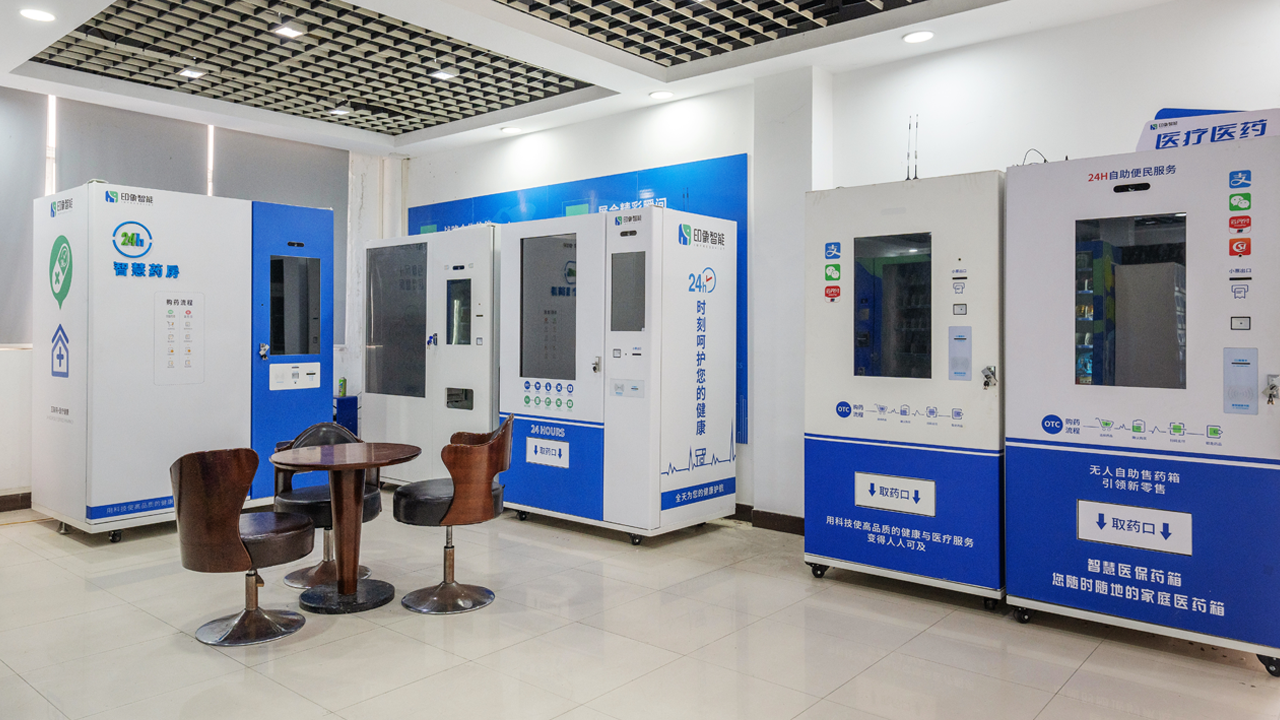
Where Can 24/7 Pharmacy Vending Machines Be Installed?
Potential locations include:
- Retail pharmacies: Extend access to selected products when the main counter is closed, where permitted.
- Hospitals and healthcare facilities: Provide convenient access to approved healthcare essentials for visitors and staff.
- University campuses: Serve students who need selected everyday healthcare products.
- Factories and workplaces: Offer convenient access to approved products for employees working different shifts.
- Hotels and transportation hubs: Support travelers who may need basic healthcare essentials outside normal retail hours.
- Residential communities: Provide a convenient additional access point where demand and local regulations support the model.
The suitability of each location should be assessed using customer demand, site access, security, operating costs and restocking requirements. For a more detailed site-selection framework, read our guide to where to install pharmacy vending machines.
What Products Can Be Offered?
Depending on local regulations and the approved operating model, a pharmacy vending machine may be configured for selected OTC products, first-aid supplies and other healthcare essentials.
Before selecting products, operators should verify:
- Whether each product category is permitted for vending in the target market
- Packaging dimensions and dispensing compatibility
- Required storage conditions and shelf-life controls
- Whether age verification or other purchase restrictions apply
- How product information and warnings will be displayed
Prescription medicines and restricted products may require additional authorization, professional oversight or specific dispensing procedures. Never assume that every medicine can be sold through an unattended machine.
For more information, see our guide to products that can be sold in pharmacy vending machines.
Features to Consider Before Deployment
When evaluating a pharmacy vending machine, consider the features that match your product range and operating environment.
Product Capacity and Compatibility
Check the size, weight and packaging of the products you plan to offer. The machine layout should support reliable dispensing and allow staff to restock products efficiently.
Storage and Product Protection
Review each product’s storage instructions and confirm whether the equipment can meet the required conditions. Temperature monitoring or other environmental controls may be necessary for specific products.
Payment and User Interface
Depending on the target market, payment options, touchscreen navigation and language settings may affect customer convenience.
Inventory and Remote Management
Inventory reporting and remote equipment monitoring can help operators identify low stock, review sales and plan maintenance. Confirm which functions are included in the selected configuration.%. This type of 24/7 vending machine for medications ensures access to essential health products at any time.

How to Plan a 24/7 Pharmacy Vending Machine Project
Start by identifying the intended users, installation location and permitted product range. Next, assess equipment compatibility, operating costs, restocking frequency and local compliance requirements.
A pilot installation can help validate demand before the project expands to additional locations. Track sales by product, stock availability, maintenance events and customer feedback to guide future decisions.
Conclusion
24/7 pharmacy vending machines can support convenient access to approved OTC products when the location, equipment and operating procedures are properly planned.
If you are evaluating an automated pharmacy retail project, explore IMT pharmacy vending machine solutions to review the available equipment and discuss your project requirements.
The appropriate configuration should be confirmed according to your target market, intended products and operational needs.