
Currently Empty: $0.00

2026-05-12
0 Comments
2026-05-12
Introduction
An OTC vending machine provides an automated way to sell eligible over-the-counter (OTC) medicines and selected healthcare products in locations where convenient access matters. For pharmacies, hospitals, vending operators, distributors, and facility managers, these machines can support extended product availability while helping businesses manage product sales and inventory.
However, choosing an OTC vending machine involves more than selecting a cabinet with enough product slots. Buyers need to evaluate product compatibility, storage conditions, dispensing reliability, payment methods, inventory management, security, maintenance requirements, and local regulations.
Whether you are planning to install an OTC medicine vending machine in a pharmacy, healthcare facility, workplace, or other approved location, understanding these factors can help you select equipment that matches your business requirements.
This guide explains how OTC vending machines work, which features matter most before purchasing, how to evaluate storage and dispensing safety, what regulatory considerations to review, and how to compare manufacturers.
1. What Is an OTC Vending Machine?
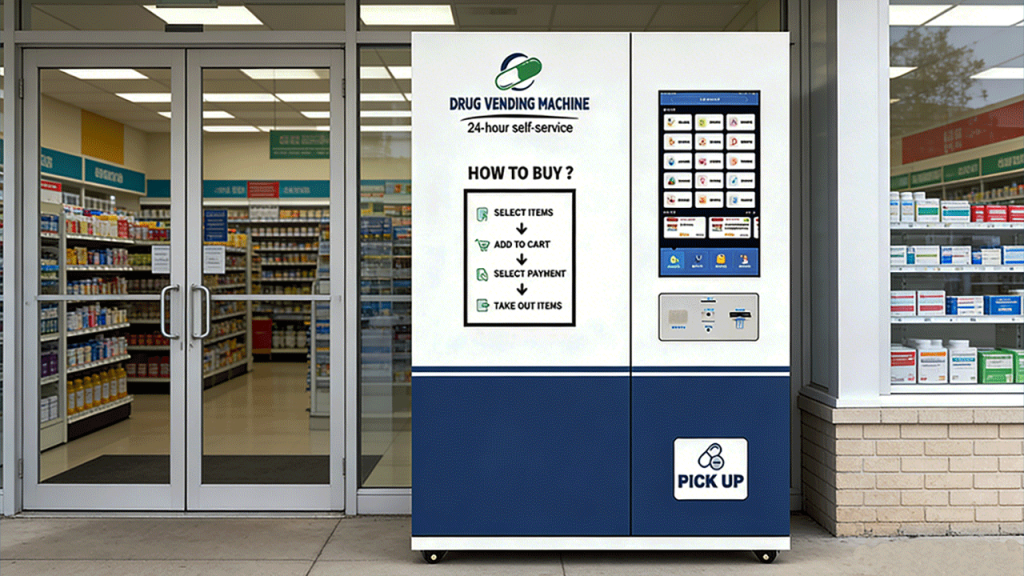
An OTC vending machine is an automated retail unit designed to dispense eligible non-prescription medicines and, depending on its configuration, selected first-aid supplies and personal care products.
Unlike a conventional snack vending machine, an OTC medication vending machine must be evaluated according to the requirements of its intended inventory. Product packaging, storage conditions, access controls, labeling, and dispensing methods can all affect whether a particular machine is suitable.
Depending on the model and operating system, an OTC vending machine may support:
- Touchscreen product selection and product information
- Electronic payment and cashless transactions
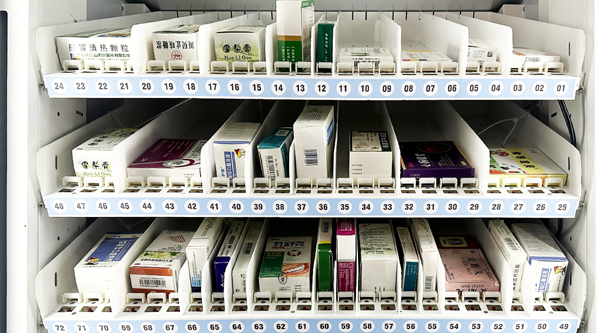
- Multiple dispensing slots for different package sizes
- Temperature monitoring or environmental controls where required
- Secure product storage and controlled dispensing
- Remote sales, inventory, and equipment-status monitoring
- Age verification or other access controls where applicable
Not every OTC vending machine includes every feature. Buyers should verify the specifications of the proposed configuration before placing an order.
For businesses comparing automated healthcare retail equipment, it is also important to distinguish between a general OTC vending machine and a broader pharmacy vending machine solution. The appropriate equipment depends on the intended products, operating model, storage requirements, and applicable regulations.
Explore the IMT Pharmacy Vending Machine range to review the available product category and discuss equipment requirements for your project.
2. How OTC Vending Machines Work
An OTC medicine vending machine combines a product-selection interface, payment system, dispensing mechanism, and inventory-management process. The exact workflow depends on the equipment configuration and the rules governing the products being sold.
Step 1: Product Selection
Customers browse the available products through the machine interface. Product names, prices, package information, and other required consumer information should be presented clearly.
Step 2: Verification When Required
Some products or jurisdictions may require age verification, eligibility checks, or other access controls. Before deployment, buyers should confirm whether these procedures apply and whether the proposed system can support them.
Step 3: Payment Processing
Customers pay using one of the payment methods supported by the machine. International buyers should verify compatibility with local payment providers, bank cards, contactless payments, mobile wallets, currencies, and transaction requirements.
Step 4: Product Dispensing
After a successful transaction, the machine releases the selected product through its dispensing mechanism. Product dimensions, packaging weight, orientation, and fragility should be tested to reduce dispensing errors.
Step 5: Inventory and Sales Management
Where supported, the management platform records sales and updates inventory information. Operators may be able to monitor stock levels, review sales reports, receive low-stock notifications, and identify equipment issues remotely.
For operators managing several locations, these functions can help organize replenishment schedules and reduce unnecessary site visits.
A reliable OTC vending operation depends on more than the machine itself. Equipment configuration, appropriate inventory selection, staff procedures, maintenance, and regulatory controls must work together.
3. Key Features to Compare Before Buying an OTC Vending Machine
When comparing OTC vending machines, buyers should evaluate how each configuration supports their intended products and operating environment rather than choosing equipment based on appearance or advertised capacity alone.
Product Capacity and Packaging Compatibility
The number of dispensing slots does not necessarily indicate how many products a machine can hold in practice.
Review the dimensions of each slot, the packaging sizes of the intended products, the number of units that can be stored, and the time required for replenishment.
Before ordering, provide the supplier with a representative product list and packaging dimensions. Where possible, request a dispensing demonstration using the actual packages you intend to stock.
Storage and Environmental Control
Different healthcare products have different storage requirements. Buyers should identify the conditions required for their intended inventory and compare them with the machine’s verified specifications.
Where temperature monitoring or other environmental controls are necessary, ask the manufacturer about sensor specifications, alert functions, data records, and procedures for responding to environmental deviations.
Do not assume that every OTC vending machine provides refrigeration or specialized environmental control. Confirm these capabilities for the specific model and configuration.
Dispensing Reliability
Reliable dispensing is important for customer experience, inventory accuracy, and day-to-day operations.
Ask the supplier how the machine handles failed dispensing, what happens when a customer completes payment but does not receive the selected product, and how operators can access the equipment for troubleshooting.
Testing representative product packages can help identify compatibility issues before deployment.
Payment System Compatibility
Payment requirements vary by country, installation location, and customer group.
Confirm whether the machine supports your required payment methods and whether additional payment terminals, software integration, or service subscriptions are necessary.
International buyers should also check transaction fees, connectivity requirements, payment-provider availability, and settlement arrangements.
Remote Monitoring and Inventory Management
For vending operators and businesses managing multiple machines, remote management can help improve operational visibility.
Depending on the software configuration, useful functions may include:
- Sales reporting and transaction records
- Stock-level monitoring
- Low-inventory alerts
- Equipment-status monitoring
- Fault notifications
- Remote configuration or management
Ask the supplier to demonstrate which functions are included, whether recurring software fees apply, and how operators access their data.
Security and Access Controls
Evaluate cabinet locking, service access, payment security, and any age-verification or eligibility functions required by the intended products and market.
The necessary controls depend on the operating environment, product range, and applicable regulations. Buyers should confirm the requirements before finalizing the machine specification.
Maintenance and After-Sales Support
An OTC vending machine should be practical to maintain throughout its operating life.
Ask about warranty coverage, spare parts availability, maintenance procedures, troubleshooting support, software updates, and the expected response time for technical inquiries.
For international buyers, it is particularly important to clarify remote support arrangements, shipping responsibilities for replacement parts, and the availability of technical documentation.
When comparing suppliers, use a consistent checklist so that you can evaluate equipment configurations on the same basis.
4. OTC Vending Machine Applications and Locations
OTC vending machine applications depend on local regulations, site permissions, customer demand, and the products permitted for sale. A high-traffic location is not automatically a suitable location for an automated medicine retail operation.
Pharmacies
Pharmacies may consider OTC vending machines as a way to provide access to selected eligible products outside traditional counter hours, where permitted.
A machine may complement an existing retail operation, but the pharmacy must determine which products can be sold through the proposed system and what operational controls are required.
Hospitals and Healthcare Facilities
Hospitals and medical campuses may evaluate vending machines for approved healthcare products needed by visitors, staff, or other eligible users.
Before installation, facility managers should review site policies, product restrictions, access arrangements, and any applicable healthcare requirements.
Workplaces and Industrial Sites
Factories, warehouses, distribution centers, and large workplaces may consider OTC vending machines for employee convenience.
Site planning should include employee demand, installation permissions, security, replenishment access, and the permitted product range.
Universities and Residential Communities
Universities, student housing, and residential communities may offer convenient access to selected healthcare products where local rules allow.
Buyers should consider the expected customer base, opening-hour restrictions, site management policies, and the availability of alternative retail services.
Transportation Hubs and Hotels
Airports, railway stations, hotels, and other travel-related locations may provide opportunities for automated retail of permitted healthcare products.
Potential operators should evaluate foot traffic, product demand, installation permissions, security, and replenishment logistics before committing to a site.
How to Evaluate a Potential Location
Before installing an OTC vending machine, assess:
- The number and type of potential customers
- The products customers are likely to need
- Site access and installation permissions
- Local restrictions on automated medicine sales
- Security and environmental conditions
- Replenishment frequency and maintenance access
- Connectivity and payment-system availability
For businesses planning multiple installations, a small pilot deployment can help validate customer demand and operating requirements before expanding to additional locations.
5. Product Storage, Expiry Control and Dispensing Safety
Storage, expiry management, and dispensing safety should be considered from the beginning of an OTC vending machine project. The appropriate controls depend on the products being sold and the requirements of the target market.
Match Storage Conditions to the Products
Before selecting a machine, prepare an inventory list that includes product names, packaging dimensions, storage requirements, and any special handling conditions.
Check whether the proposed configuration can maintain the required conditions for the intended products. If monitoring or alerts are necessary, confirm that the relevant hardware and software functions are included.
A supplier’s general product description should not replace verification of the actual storage specifications.
Establish an Expiry-Date Management Process
Operators should have a clear procedure for checking expiry dates and rotating inventory.
A practical process may include:
- Recording product names, batch information, and expiry dates where required
- Checking expiry dates during replenishment
- Rotating stock according to an appropriate first-expiring, first-out procedure
- Removing expired or damaged products promptly
- Maintaining records where required by the operating rules
- Reviewing inventory regularly to identify slow-moving products
If the machine’s software does not provide batch-level or expiry-date tracking, operators may need a separate inventory process. Buyers should confirm this capability before assuming it is included.
Plan for Recalls and Damaged Products
Businesses should establish a process for identifying and removing recalled, damaged, or otherwise unsuitable products.
The process should define who is responsible for checking product notices, disabling affected items from sale, physically removing stock, and documenting the action where required.
Test Dispensing Compatibility
Packaging dimensions and orientation can affect dispensing performance.
Before deployment, test representative packages and confirm that the machine can dispense them consistently. Fragile packaging, unusually shaped items, and products with special handling requirements may require additional evaluation.
Maintain Clear Consumer Information
Product information should be accurate and presented in a way that meets the requirements of the relevant market.
Operators should confirm the information that must be displayed before purchase, including product identity, price, required warnings, and other applicable consumer information.
These procedures should be established alongside equipment selection, not added only after the machine has been installed.
6. OTC Vending Machine Compliance by Country
OTC vending machine compliance depends on the country or region, the product category, the operator’s authorization, the installation location, and the sales process.
A machine that is technically capable of dispensing a product is not automatically authorized to sell that product.
Before deployment, buyers should verify:
- Which medicines and healthcare products may be sold through an automated machine
- Whether the operator, retailer, or location requires a license or authorization
- Whether age verification or other eligibility checks are required
- Which product labeling and consumer information must be provided
- What storage conditions must be maintained and documented
- How expired, recalled, damaged, or returned products must be handled
- Whether the installation, payment workflow, and operating procedures meet local requirements
United States
For projects in the United States, buyers should check applicable federal requirements as well as relevant state and local pharmacy, medicine retail, consumer protection, and automated-sales rules.
Requirements may vary according to the products being sold and the operating model. Buyers should confirm the applicable rules with the relevant authorities or qualified local advisers before launching the service.
United Kingdom and European Markets
For projects in the United Kingdom or European markets, buyers should verify the rules that apply to the specific products, sales channel, operator, and installation location.
Do not assume that the requirements for one country automatically apply to another. Product classification, retail permissions, consumer information, and operating procedures should be checked for the target market.
Other International Markets
For other countries, buyers should identify the relevant medicines regulator and the authorities responsible for retail licensing, site permissions, and consumer protection.
The proposed product list and operating workflow should be reviewed before equipment is ordered, especially when the project involves medicines subject to additional restrictions.
What Buyers Should Request from a Manufacturer
When discussing an OTC vending machine project, ask the manufacturer to provide relevant technical specifications, operating documentation, and information about the functions included in the proposed configuration.
Remember that machine specifications and quality certificates do not, by themselves, establish that an entire vending operation complies with local medicine-sales rules. Regulatory approval and operating permissions must be confirmed for the intended market and business model.
7. OTC Vending Machine Cost and Total Cost of Ownership
The cost of an OTC vending machine depends on its capacity, dispensing configuration, storage requirements, payment system, software, customization, and order quantity.
There is no single price that applies to every project. Buyers should request a quotation based on their actual product list, target market, and installation requirements.
Factors That Affect the Purchase Price
The main factors to evaluate include:
- Machine size and product capacity
- Number and configuration of dispensing slots
- Required temperature monitoring or environmental controls
- Touchscreen and user-interface requirements
- Payment terminals and integration
- Remote monitoring and inventory software
- Cabinet branding and customization
- Packaging, shipping, and installation requirements
- Order quantity and requested delivery arrangements
A basic configuration may not include every function required for a particular project. Compare the specifications and included services rather than relying on the headline price alone.
Additional Operating Costs
The total cost of ownership can include more than the initial equipment purchase.
| Cost category | What to evaluate |
|---|---|
| Equipment | Machine price and selected configuration |
| Shipping | Export packaging, freight, insurance, and destination charges |
| Installation | Site preparation, electrical work, network access, and setup |
| Payment processing | Transaction fees, payment services, and related charges |
| Software | Subscription fees, connectivity, and system integration |
| Inventory | Initial stock, replenishment, expiry losses, and stock rotation |
| Maintenance | Routine servicing, spare parts, and repairs |
| Labor | Restocking, cleaning, monitoring, and administration |
| Site costs | Rental, commissions, electricity, and other location expenses |
Actual costs depend on the country, supplier, installation arrangement, and operating model.
How to Compare Supplier Quotations
Request a quotation that clearly identifies the machine model, included functions, optional features, payment configuration, software costs, warranty, spare parts, shipping terms, and delivery schedule.
Where possible, compare suppliers using the same product list and technical requirements.
For projects with several planned locations, evaluate the expected replenishment workload and maintenance requirements as well as the equipment price.
Estimate Business Viability Before Ordering
A vending machine’s commercial performance depends on customer demand, product selection, selling prices, operating expenses, and the permitted business model.
Before investing, estimate expected sales using realistic assumptions and account for site costs, inventory losses, payment fees, maintenance, and labor.
For additional business-planning considerations, see the OTC Medication Vending Machine Business Guide.
Any projected revenue or payback period should be treated as an estimate rather than a guarantee.
8. How to Choose an OTC Vending Machine Manufacturer
Choosing the right OTC vending machine manufacturer involves comparing technical capability, product compatibility, customization, documentation, and long-term support.
For international B2B buyers, a supplier should be able to understand the project’s requirements and explain which machine configuration is appropriate.
Step 1: Define the Target Market and Operating Model
Identify the country, installation location, intended customers, and proposed product categories.
Check local restrictions before finalizing the machine specification.
Step 2: Prepare a Detailed Product List
List the products you intend to sell, their packaging dimensions, storage requirements, and any special sales restrictions.
This information helps the manufacturer evaluate slot layout and dispensing compatibility.
Step 3: Confirm Technical Specifications
Request detailed specifications for capacity, dispensing methods, payment systems, user interface, environmental controls, security, and remote management.
Ask the manufacturer to distinguish between standard features and optional customization.
Step 4: Request a Demonstration
Where practical, ask for a demonstration using representative product packages.
Review dispensing performance, replenishment procedures, user interaction, and the process for handling failed transactions.
Step 5: Evaluate Customization and Integration
Depending on the project, you may need customized branding, a specific interface, local payment integration, different product layouts, or software connectivity.
Confirm feasibility, additional costs, and development timelines before placing an order.
Step 6: Review Warranty and After-Sales Support
Ask about warranty coverage, spare parts, technical documentation, troubleshooting procedures, and remote support.
For international projects, clarify shipping responsibilities, replacement-part arrangements, and the process for resolving equipment issues.
Step 7: Compare Total Project Cost
Compare complete quotations rather than the machine price alone.
Include optional functions, shipping, installation, software, maintenance, and other expected operating costs.
Step 8: Consider a Pilot Deployment
Where practical, begin with a location that has a defined customer base and manageable operating requirements.
Monitor product demand, stock rotation, dispensing performance, maintenance, and total operating costs before expanding.
A structured purchasing process helps buyers evaluate whether a machine and its manufacturer are suitable for the intended application.
9. Frequently Asked Questions About OTC Vending Machines
What is an OTC vending machine?
An OTC vending machine is an automated retail unit designed to dispense eligible non-prescription medicines and, depending on its configuration, selected healthcare products. The permitted product range depends on local regulations and the operating model.
What is the difference between an OTC vending machine and an OTC medicine vending machine?
The terms are commonly used for the same general equipment category. The actual product range, storage conditions, access controls, and dispensing functions depend on the machine configuration and applicable rules.
Can an OTC vending machine operate 24/7?
The equipment may support continuous operation, but actual availability depends on site access, inventory, power and network connectivity, maintenance, payment services, and local regulations.
Are OTC vending machines legal?
The answer depends on the jurisdiction, the products being sold, the operator’s authorization, and the installation location. Buyers should verify the applicable requirements before deployment.
Can one OTC vending machine sell different types of products?
Potentially, yes. The available product mix depends on slot dimensions, package compatibility, dispensing reliability, storage requirements, and applicable restrictions.
Do OTC vending machines require temperature control?
Not every product requires the same storage conditions. Buyers should identify the requirements of the intended inventory and confirm that the selected machine can meet them. Temperature monitoring or environmental controls may be necessary for some applications.
How much does an OTC vending machine cost?
The price depends on machine capacity, dispensing configuration, payment systems, software, storage requirements, customization, and order quantity. Buyers should request a project-specific quotation based on their intended products and target market.
What should I ask an OTC vending machine supplier?
Ask for verified specifications, packaging compatibility, payment options, software functions, maintenance requirements, warranty terms, spare parts arrangements, delivery details, and documentation relevant to the intended market.
Can IMT customize an OTC vending machine for my business?
Customization options should be confirmed against the requested configuration. Buyers can discuss branding, interface requirements, product layout, payment compatibility, and other project-specific needs with IMT.
10. Explore IMT Pharmacy Vending Machines
Selecting an OTC vending machine requires a clear understanding of the intended products, local regulations, installation environment, storage requirements, and operating costs.
For pharmacies, hospitals, vending operators, distributors, and facility managers, the right equipment should match the project’s actual needs while remaining practical to operate, maintain, and replenish.
IMT works with business customers evaluating automated vending equipment for different markets and installation scenarios. The appropriate configuration should be assessed according to the requested product range, capacity, payment requirements, and other project-specific conditions.
Explore the IMT Pharmacy Vending Machine range to discuss your equipment requirements.
Request a Project-Specific Quotation
To help evaluate a suitable configuration, please share:
- Target country: Where the machine will be installed
- Intended products: The OTC or healthcare products you plan to sell
- Required capacity: Approximate product types and quantities
- Payment requirements: Preferred payment methods and integration needs
- Estimated order quantity: The number of machines planned for the project
Contact the IMT team to discuss your requirements and request a quotation.
The final equipment configuration should be confirmed against your intended products, technical requirements, and applicable local regulations before deployment.