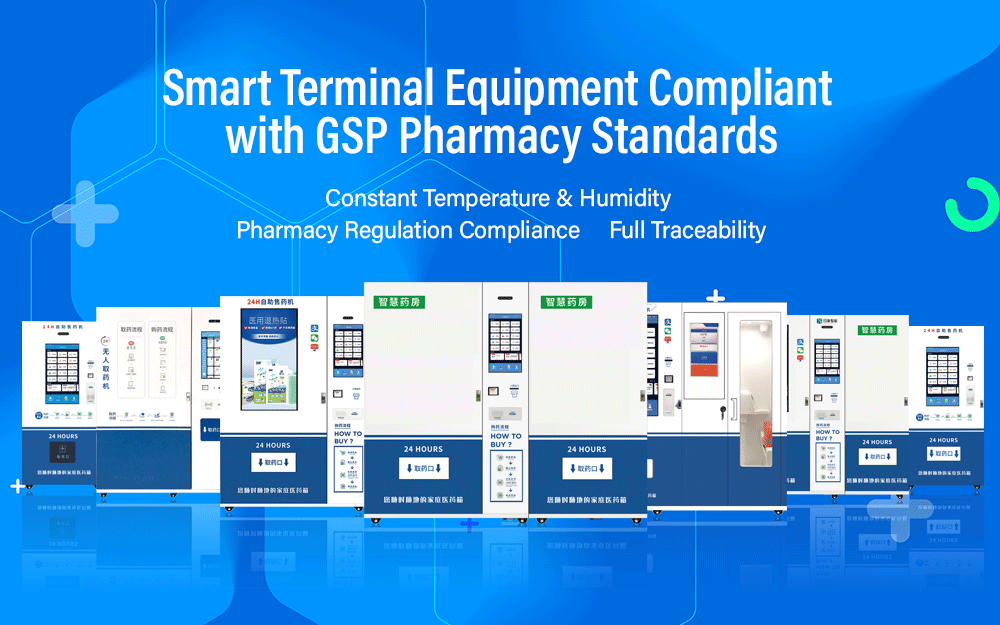
The healthcare retail landscape is undergoing a dramatic transformation. As consumers demand 24/7 access to medications and businesses seek operational efficiency, pharmacy vending machines have emerged as a critical solution. However, not all pharmacy vending machines are created equal.
For procurement managers, hospital administrators, and retail owners, understanding the distinct types available is the first step toward making a cost-effective, compliant, and profitable investment. From basic over-the-counter (OTC) dispensers to sophisticated prescription-dispensing clinics, the market offers a range of configurations tailored to specific use cases.
In this comprehensive guide, we will break down the primary categories of pharmacy vending machines, their technical specifications, and the ideal scenarios for each.
1. OTC Medicine Vending Machines (General Health & Wellness)
The most common entry point into automated pharmaceutical retail is the OTC Medicine Vending Machine. These units are designed to dispense non-prescription drugs such as pain relievers, cold medicine, first-aid supplies, and vitamins.
Key Features:
- High Slot Capacity: Typically offering between 107 and 155 slots to accommodate a wide variety of boxed medicines.
- User-Friendly Interface: Equipped with large touchscreens (usually 21.5 to 32 inches) for easy browsing.
- Basic Security: Standard locking mechanisms suitable for general public access in semi-supervised environments.
Best For:
- Workplaces & Factories: As noted by IMT, these machines save site rent and labor costs while providing “fast and easy access to essential medicines” for employees.
- Subway Stations & Shopping Malls: Capturing impulse purchases for common ailments like headaches or motion sickness.
- Hotel Lobbies: Offering guests convenience without requiring a concierge.
These machines focus on volume and accessibility. They typically do not require complex patient verification systems, making them the fastest to deploy.
2. Prescription Drug Dispensing Machines (Pharmacy Clinics)
For regulated environments, the Prescription Medicine Vending Machine represents a leap in technology. These are not simple vending units; they are automated dispensaries that integrate with pharmacy management systems to fill actual prescriptions.
Key Features:
- User Authentication: Integration with biometrics (fingerprints), ID scanners, or QR codes to verify the patient’s identity.
- Cold Chain Management: Real-time temperature and humidity control to preserve sensitive drugs like insulin.
- HIPAA Compliance: Privacy screens and secure data handling to protect patient health information.
Best For:
- 24/7 Pharmacy Clinics: Allowing patients to pick up prescriptions after the pharmacist has gone home.
- Hospital Emergency Rooms: Reducing wait times for discharge medications.
- Remote Communities: Providing access to critical drugs where local pharmacies are closed.
As highlighted by IMT, their “24/7 Pharmacy Clinic Medicine Vending Machine” is specifically designed for prescription and OTC medicine, featuring real-time temperature and humidity monitoring to ensure optimal storage conditions.
3. Automated Pharmacy Dispensing Cabinets (For Clinical Staff)
Strictly a B2B solution, automated dispensing cabinets (ADCs) are used inside hospitals and long-term care facilities by nurses and doctors. Unlike public vending machines, these are secured with staff logins and track controlled substances.
Key Features:
- Narcotic Locking Drawers: Secure storage for controlled substances with double-signature requirements.
- Integration with EHR: Automatically updates patient records and billing upon dispensing.
- Barcode Scanning: Ensures the right medication is given to the right patient at the bedside.
Best For:
- Hospital Wards: Reducing the time nurses spend walking to a central pharmacy.
- Surgical Centers: Having emergency drugs available instantly in the operating suite.
4. Combination Health & Drug Vending Machines (Multi-Function)
A growing trend in smart retail is the Combination Drug Vending Machine. These units pair medication dispensing with other health-related products or general retail goods to increase foot traffic and revenue per transaction.
Key Features:
- Mixed Inventory: One side dispenses cold medicine, while the other offers protein shakes, healthy snacks, or even masks and sanitizers.
- Constant Temperature & Humidity: Ensuring the pharmaceutical side remains stable while the snack side stays at ambient temperature.
- High-Traffic Design: Often features a 21.5-inch screen for dynamic advertising.
Best For:
- Gyms & Fitness Centers: Offering pain relief alongside protein shakes.
- Corporate Campuses: Providing flu medicine and healthy lunches in one stop.
- Transportation Hubs: Catering to travelers needing both motion sickness pills and water.
IMT’s “21.5-inch Screen Combination Drug Vending Machine” is a prime example, offering constant temperature and humidity control specifically designed for safe medical dispensing while allowing for product versatility.
5. Specialized High-Security & Cold Chain Machines
For high-value or extremely sensitive biologics, specialized machines are required. These go beyond standard refrigeration to offer pharmacy-grade cold storage.
Key Features:
- Multi-Temperature Zones: Freezer, refrigerator (2-8°C), and ambient temperature all in one unit.
- Audit Trails: Logs every time the door is opened, the temperature changes, or a drug is dispensed.
- Backup Power: Battery systems to keep drugs cold during a power outage.
Best For:
- Specialty Pharmacies: Dispensing expensive biologic drugs that must never break the cold chain.
- Veterinary Clinics: Storing vaccines for animals.

Technical Comparison: IMT Pharmacy Vending Machine Models
To help B2B buyers visualize the differences, here is a comparison of the specific models available from IMT, a leading high-tech enterprise with global reach:
| Model Type | Slot Capacity | Screen Size | Primary Use Case | Key Differentiator |
|---|---|---|---|---|
| Healthy Workforce Machine | 155 Slots | 32″ | Workplaces & Factories | High volume, fast access to OTC meds |
| 24/7 Pharmacy Clinic Machine | 369 Slots | 32″ | Prescription & OTC pickup | Real-time temp/humidity + Rx authentication |
| Combination Drug Machine | Varies | 21.5″ | High-traffic retail (Gyms, transit) | Dual-purpose (Medicines + general goods) |
| 107-Slot Pharmaceutical Machine | 107 Slots | 21.5″ | Small clinics, breakrooms | Compact, precision storage for sensitive meds |
Source: IMT Vending Product Page
How to Choose the Right Type for Your Business
Selecting the correct machine depends on three factors:
1. Regulatory Environment
- Public OTC sales? A basic 107 or 155-slot machine is sufficient.
- Prescription fulfillment? You require a clinic-grade machine with biometrics and remote pharmacist consultation capabilities.
- Hospital staff use? You need an ADC with narcotics control.
2. Location & Traffic
- Factory floor: Durable, high-capacity OTC machine (e.g., IMT 155-slot).
- Busy subway: Compact, combination machine to sell drinks + pain relievers.
- Remote clinic: A 24/7 prescription machine to extend service hours.
3. Product Sensitivity
- Vitamins & bandages: No climate control needed.
- Insulin & antibiotics: Mandatory real-time temperature and humidity monitoring.
- Controlled substances: Mandatory biometric locks and audit trails.
The Future: Smart Connectivity (VendingOS)
Regardless of the physical type you choose, the software layer is what turns a metal box into a profit center. Modern pharmacy vending machines, like those from IMT, feature AI-powered backend management systems (VendingOS).
This allows operators to:
- Monitor temperature remotely in real-time to avoid spoilage.
- Track inventory depletion and schedule refills only when needed.
- Analyze sales data to adjust product mix based on local demand (e.g., selling more allergy meds in spring).
Conclusion
The answer to “What are the different types of pharmacy vending machines available?” is no longer just “large or small.” Today, the market offers specialized solutions ranging from high-capacity OTC dispensers for factories to climate-controlled prescription clinics for remote healthcare and versatile combination units for high-traffic retail.
For B2B buyers, the decision comes down to compliance needs, location dynamics, and inventory sensitivity. As the industry standardizes toward smart, connected systems, partnering with an experienced manufacturer—like IMT Vending, which offers ISO-certified, customizable solutions exported to over 100 countries—ensures that your investment is both compliant and future-proof.
Ready to deploy a pharmacy vending machine? [Contact IMT for a customized quote] and explore ODM/OEM options tailored to your specific healthcare or retail environment.