
Currently Empty: $0.00

2026-04-21
0 Comments
Introduction
A pharmacy vending machine is an automated dispensing solution designed to make selected medicines, healthcare products, and medical supplies available through self-service retail. Depending on the configuration and operating model, it may support product sales, controlled dispensing, or specific pharmacy workflows.
For pharmacies, hospitals, healthcare providers, distributors, and vending operators, selecting the right system starts with understanding the intended use. Some projects focus on eligible over-the-counter products, while others require different dispensing workflows, integrations, or access controls.
This guide explains the main types of pharmacy vending machines, their technical features, potential applications, and the questions buyers should ask before choosing a system.
If your primary requirement is an OTC vending machine for non-prescription product sales, see our dedicated OTC vending machine buying guide for a more detailed discussion of product compatibility, storage, operating requirements, and purchasing considerations.
What Is an OTC Medication Vending Machine?
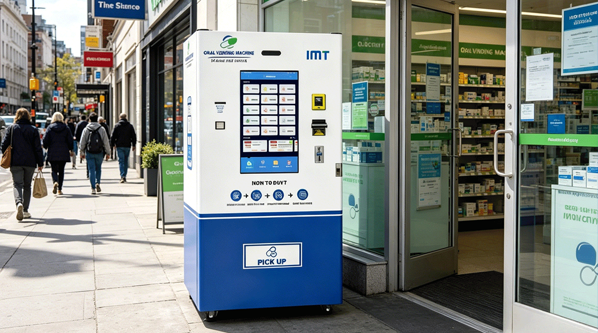
An OTC medication vending machine is an automated dispensing unit designed to sell over-the-counter products that are permitted for automated retail in the target market.
Depending on the configuration, the machine may include product selection through a touchscreen, electronic payment, multiple product slots, temperature monitoring, remote inventory management, and other operating functions.
The machine’s capabilities and permitted products depend on its actual specifications and the applicable regulations. Not every model supports every product category or storage condition.
How Does an OTC Medication Vending Machine Work?
A typical customer journey may include the following steps:
- The customer views the available products and their displayed information.
- The customer selects an eligible product.
- The payment system processes the transaction.
- The machine dispenses the selected item.
- The system records the transaction if that function is supported.
- The operator monitors stock and replenishes products as required.
Additional steps may be necessary for products subject to age restrictions or other controls. These must be configured according to the rules that apply to the target market.
What Products Can Be Sold?
The permitted product range depends on local laws, the operating model, and the storage and dispensing requirements of each product.
Potential categories for evaluation include:
- Eligible non-prescription medicines
- Selected first-aid supplies
- Permitted personal care products
- Other approved healthcare-related items
Some products may be subject to age limits, specific labeling rules, temperature requirements, or restrictions on automated sales. Prescription medicines and controlled products require particular care and must not be assumed suitable for ordinary public vending.
For a more detailed product-category discussion, read the guide to products sold in pharmacy vending machines.
Where Can OTC Medication Vending Machines Be Used?
Pharmacies
A machine may complement an existing pharmacy operation by providing access to permitted products outside the staffed counter’s opening hours, where local rules allow.
Hospitals and Healthcare Facilities
Healthcare facilities may evaluate vending machines for visitors or other eligible users. The installation must fit the facility’s policies, permitted product range, and operating arrangements.
Workplaces and Industrial Sites
Workplaces may consider a machine for approved products used by employees. Site managers should evaluate user demand, security, restocking access, and any workplace-specific requirements.
Campuses and Residential Communities
These locations may offer access to a defined product range where there is sufficient demand and the proposed sales model is permitted.
Transportation and Retail Locations
Airports, stations, and other high-traffic environments may be considered after assessing access permissions, customer needs, product suitability, and the practicalities of restocking.
Key Features to Evaluate
Product Capacity
Check the actual slot layout and package compatibility rather than relying on the slot count alone.
Storage Conditions
Confirm the temperature and environmental conditions required for the intended inventory. Review monitoring, alerting, and maintenance arrangements where applicable.
Dispensing Reliability
Ask how the machine handles different package sizes, failed dispensing, jams, and refunds. Request a demonstration using representative products.
Payment Compatibility
Confirm that the available payment methods work in the target market and identify any transaction fees or third-party service requirements.
Remote Management
Where supported, remote management may provide sales reports, stock visibility, and equipment-status information. Confirm which functions are included in the quoted configuration.
Security and Maintenance
Review locking, service access, maintenance procedures, spare parts, warranty terms, and technical support.
Compliance and Responsible Operation
Before launch, confirm the local requirements for the intended products, operator authorization, installation location, age restrictions, labeling, storage, and sales procedures.
The operating plan should also address expiration dates, stock rotation, recalled products, customer complaints, refunds, and equipment faults.
A machine’s technical functions do not independently establish regulatory compliance. Operators remain responsible for confirming that the equipment and business model are suitable for their market.
How to Choose an OTC Medication Vending Machine
Before requesting a quotation, prepare the following information:
- Target country and intended installation location
- Product categories and package dimensions
- Required capacity and dispensing method
- Storage and monitoring requirements
- Payment methods and interface languages
- Remote management or integration needs
- Estimated quantity and delivery destination
Review the IMT pharmacy vending machine product range to explore available equipment options.
For a more detailed comparison of purchasing considerations, see the OTC medication vending machine buying guide.
Frequently Asked Questions
Are OTC medication vending machines legal?
Their legality depends on the jurisdiction, the products being sold, the operator’s authorization, the installation location, and the dispensing process. Verify local requirements before deployment.
Can an OTC medication vending machine operate 24/7?
The equipment may support continuous operation, but actual availability depends on site access, local regulations, maintenance, payment connectivity, and replenishment.
Can all OTC products be stored in the same machine?
Not necessarily. Different products may have different storage, package, and sales-control requirements. Confirm compatibility before stocking the machine.
Can the machine be managed remotely?
Some configurations support remote monitoring and inventory functions. Ask the supplier to demonstrate the actual software capabilities and clarify any recurring fees.
Conclusion
An OTC medication vending machine can support automated access to eligible non-prescription products when the equipment, inventory, and operating model are appropriate for the target market.
The best purchasing decision begins with product requirements and compliance checks, followed by a comparison of storage, dispensing, payment, management, and support features.
Explore the IMT pharmacy vending machine product range to discuss a configuration suited to your project.