
Currently Empty: $0.00


2025-12-02
0 Comments
Introduction
Access to everyday healthcare products can be challenging when nearby pharmacies have limited opening hours or when residents need a more convenient way to obtain approved products.
Community pharmacy vending machines offer one potential solution by providing a self-service channel for selected over-the-counter (OTC) products and healthcare essentials. For community pharmacies, property operators, healthcare organizations and vending distributors, these systems can support more flexible product access when the equipment, inventory and operating procedures are properly planned.
As a vending machine manufacturer, IMT provides pharmacy vending machine solutions for businesses evaluating automated healthcare retail projects. The appropriate configuration depends on the target market, intended products, installation environment and applicable regulatory requirements.
1. Why Consider Community Pharmacy Vending Machines?
Traditional pharmacy services rely on staffed locations and defined operating hours. In some communities, this may leave opportunities to improve convenient access to selected healthcare products.
A community pharmacy vending machine can provide an additional access point in a suitable location, complementing existing pharmacy services rather than replacing professional healthcare support.
Potential benefits include:
- Convenient product access: Selected approved products may be available at additional locations or outside conventional retail hours.
- Flexible installation options: Machines can be evaluated for community service centers, residential developments, workplaces and other suitable environments.
- Organized inventory management: Digital management tools, where supported, can help operators review stock and plan replenishment.
- Scalable deployment: Operators can assess a pilot installation before expanding to additional locations.
Actual results depend on local demand, product restrictions, operating costs and the capabilities of the selected equipment.

2. Where Can Community Pharmacy Vending Machines Be Installed?
The best location depends on the needs of the intended users and the practical requirements of the project.
Community Service Centers
Community service centers may be suitable when residents need convenient access to approved healthcare essentials. Operators should assess visitor demand, accessibility, security and the availability of staff or partners responsible for replenishment.
Residential Communities
Residential developments may offer opportunities to provide selected healthcare products close to where people live. Before installation, evaluate resident demand, property management requirements and local rules governing the products being sold.
Office Buildings and Industrial Parks
Workplaces with employees on different shifts may consider vending machines for approved healthcare essentials. The product range should reflect the needs of the users and the operating environment.
Transportation and Public Facilities
Transportation hubs and other public facilities may be suitable when there is sufficient demand and a practical plan for maintenance, security and restocking.
For more site-selection ideas, read our guide to where to install pharmacy vending machines.
3. How to Select Products for a Community Pharmacy Vending Machine
Product selection should begin with local regulations and the needs of the intended users.
Depending on the market and authorized operating model, the product range may include permitted OTC products, first-aid supplies and other healthcare essentials.
Before selecting inventory, consider:
- Whether each product category is permitted for sale through the proposed machine
- Package size, weight and dispensing compatibility
- Required storage conditions
- Product labeling, expiry-date control and applicable purchase restrictions
- Expected demand and the frequency of restocking
Prescription medicines may require additional authorization, professional oversight or specific dispensing procedures. Do not assume that every pharmacy vending machine can legally dispense prescription products.
For additional product-planning guidance, see what products can be sold in pharmacy vending machines.

4. Equipment Features and Smart Management
A suitable pharmacy vending machine should match the intended product range and the practical requirements of the installation site.
Product Capacity and Dispensing Compatibility
Review the number of products to be offered, packaging dimensions and dispensing requirements. The machine configuration should support the intended inventory and allow efficient restocking.
Storage and Environmental Requirements
Check the storage instructions for each product. Where controlled conditions are necessary, confirm that the selected equipment supports the required environment and any relevant monitoring functions.
Payment and User Interface
Depending on the target market, payment methods, touchscreen options, language settings and user instructions may affect convenience and accessibility.
Inventory and Remote Monitoring
Where supported by the selected system, inventory reporting and remote equipment monitoring can help operators review stock, identify maintenance needs and coordinate multiple locations.
Before purchasing, confirm which functions are included in the specific configuration and whether software integration or additional hardware is required.
For more information, read our guide to pharmacy vending machine technology and remote management.
5. How to Plan a Community Pharmacy Vending Machine Project
A successful project requires coordination between the equipment supplier, site operator and any authorized pharmacy or healthcare partner.
Step 1: Define the Project Requirements
Identify the target users, installation location, intended products, operating hours and project objectives.
Step 2: Confirm Local Compliance Requirements
Determine which products may be sold through the proposed system and whether specific licenses, operator responsibilities, storage controls or dispensing procedures apply.
Step 3: Select the Equipment Configuration
Compare capacity, package compatibility, storage requirements, payment options, security features and management functions.
Step 4: Establish an Operating Process
Assign responsibility for purchasing, restocking, inventory checks, expiry-date control, equipment maintenance and customer support.
Step 5: Evaluate Pilot Performance
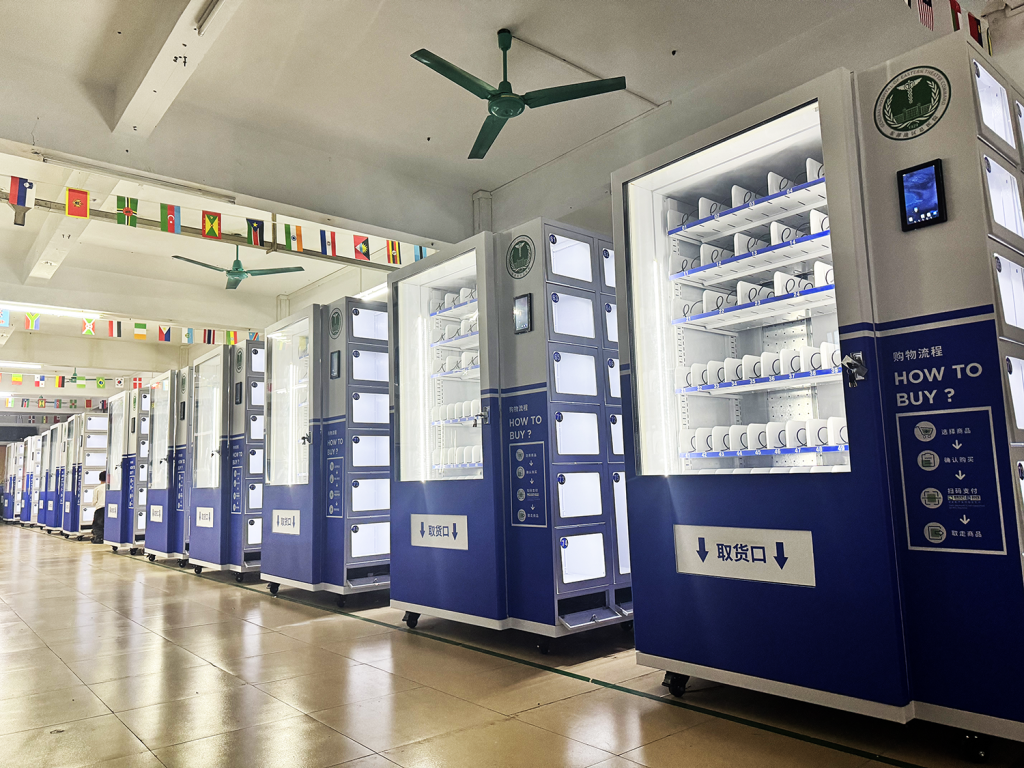
Where practical, begin with a pilot installation. Monitor sales, stock availability, operating costs, maintenance requirements and customer feedback before expanding the project.oints, with pickup hours covering 8 AM to 8 PM. Some models support 24-hour service, truly achieving “last-mile” coverage of health services.
6. Why Work With an Equipment Manufacturer?
For businesses planning one installation or a multi-location deployment, supplier selection should consider more than the initial equipment price.
Important factors include:
- Product specifications and configuration options
- Customization and branding capabilities
- Technical documentation and relevant compliance information
- Software and payment compatibility
- Warranty terms, spare parts and after-sales support
- Manufacturing lead times and shipping arrangements
IMT works with business customers to assess equipment requirements and discuss suitable configurations for their intended applications. Available options should be confirmed for the selected model and target market.
7. Building a More Connected Community Service Model
Pharmacy vending machines can form part of a broader community retail or healthcare service strategy. Depending on the project, operators may coordinate the equipment with existing pharmacy services, inventory workflows or authorized digital systems.
Any connection to hospital information systems, prescription workflows or personal health data requires separate technical, security and regulatory assessment. Such integrations should only be described as available when confirmed for the specific deployment.
The most practical approach is to begin with a clear service objective, select suitable equipment and establish reliable operating procedures before considering more advanced integrations.
Conclusion
Community pharmacy vending machines can provide an additional channel for convenient access to approved healthcare products. Their suitability depends on local demand, compliant product selection, equipment compatibility and a sustainable operating plan.
IMT supports businesses evaluating pharmacy vending machine projects, from initial equipment selection to configuration discussions. Explore IMT pharmacy vending machine solutions or contact IMT to discuss your target market, intended product range and project requirements.